✓ InterNACHI® Master Certified ✓ 120-Point Inspection ✓ Reports in 24 Hours
📞 (320) 674-7553
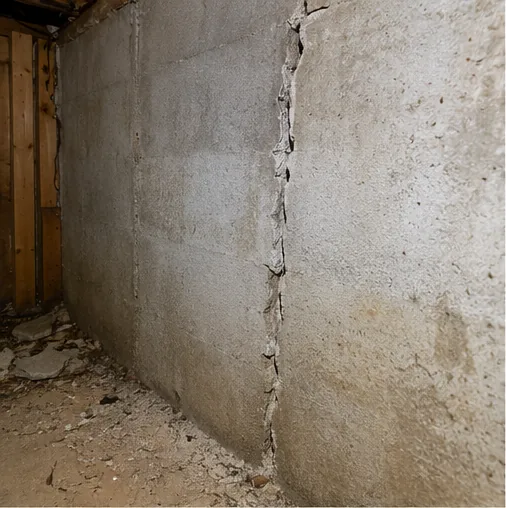
Horizontal crack across a poured concrete foundation wall in Hutchinson, MN
⬥ Hutchinson, MN · Foundation & Structural

Horizontal foundation cracks: the one we never ignore.

Of all the cracks in a basement, a horizontal one running across the middle of the wall is the most serious. It means the soil outside is winning the push against the wall.

★★★★★ 5-star rated✓ Same-day online scheduling✓ Walk-through included
What It Is

What horizontal foundation cracks actually is.

A horizontal foundation crack runs side-to-side across a foundation wall, usually near the middle third in poured concrete or along a single mortar joint in block. Unlike vertical shrinkage cracks, which relieve drying stress and are often harmless, a horizontal crack is a bending failure: the wall is flexing inward under sideways pressure from the soil behind it. It is the classic signature of a wall under more lateral load than it was built to resist.

Why it matters. This is the finding that most often turns a routine inspection into an engineer referral. In Hutchinson, where saturated clay and deep frost press hard against below-grade walls, a horizontal crack can mark the early stage of a wall that will eventually bow or shear. Catching it early — before the wall displaces — is the difference between a manageable reinforcement and a full wall rebuild.

Get Your Free Quote
Bowing and horizontally cracked basement foundation wall
Free 2-Minute Quote

Concerned about this? Get it inspected.

This finding is covered by our standard 120-point inspection. Get your free quote, choose a time, and add thermal imaging or mold testing to map what's hidden.

Signs & Symptoms

What it looks like.

The warning signs we document and that you can watch for.

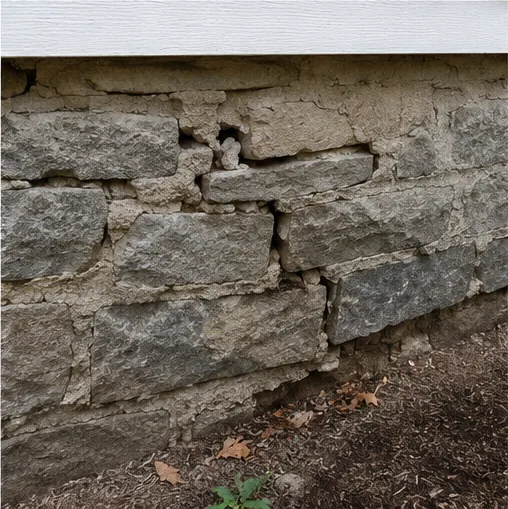
Cracked and shifting stone foundation wall exterior
Signs

What to look for

A crack running horizontally across the wall, often at or just above the mid-height. Watch for the wall bulging or leaning inward along the crack line, fresh debris or fallen flakes at the base, the crack tracking the outside grade line, and dampness or efflorescence along it. In block walls, a horizontal crack along one mortar course is an especially strong warning.

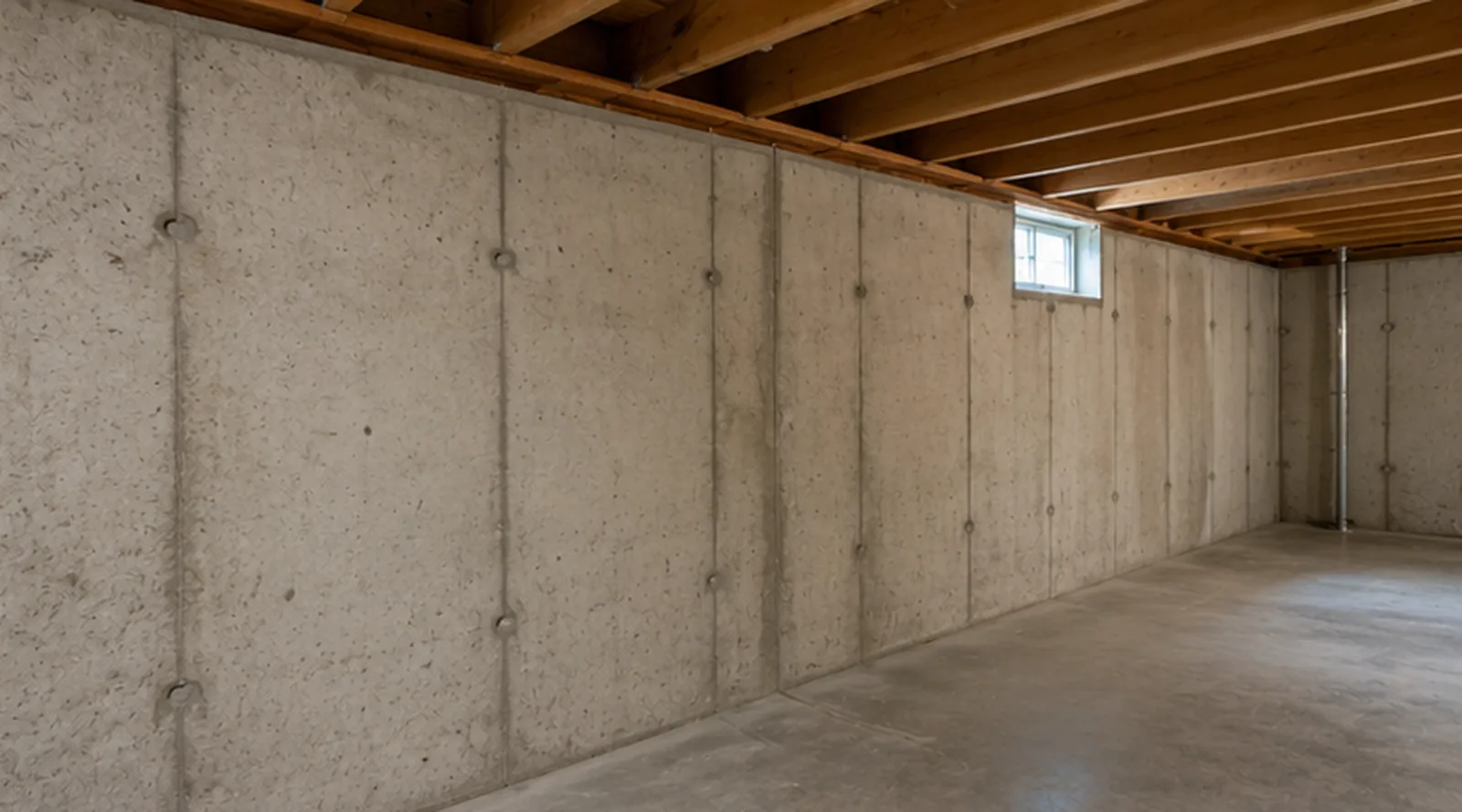
Poured concrete foundation wall checked for horizontal cracking in Hutchinson, MN
Causes

Why it happens

Lateral earth pressure is the root cause: soil that expands when wet or freezes against the wall pushes inward. Hydrostatic pressure from a high water table and poor drainage adds to it, as does frost pressure when saturated soil freezes and expands. Backfill that was over-compacted, heavy equipment or vehicles parked near the foundation, and tree roots can all increase the load.

Horizontal crack across a poured concrete foundation wall in Hutchinson, MN
Risk

If it's ignored

A horizontal crack signals a wall losing the battle with the soil. Ignored, it leads to progressive inward bowing, shearing of the wall, and ultimately structural failure that requires excavation and rebuilding. Along the way it admits water, radon, and pests. Because the load is ongoing, these cracks rarely stabilize on their own — the pressure has to be relieved.

Repair Options

How it's addressed.

The first job is relieving the pressure: improving exterior drainage and grading so soil isn't saturated, and sometimes excavating to reduce backfill load. The wall itself is reinforced — carbon-fiber straps for early bowing, steel I-beams (wall anchors or braces) for more advanced cases, or wall replacement when displacement is severe. A structural engineer must design the repair; we identify and document the finding and refer.

This is one of the findings covered by the full 120-point home inspection and documented under our foundation inspection. Related issues worth reading: Bowing basement walls Stair-step cracks Freeze-thaw damage Poor grading & drainage.

Poured concrete foundation wall checked for horizontal cracking in Hutchinson, MN
Common Variations

What turns up around Hutchinson.

Lateral soil pressure

Mid-wall horizontal cracking as wet or frozen soil pushes the wall inward.

Hydrostatic pressure

Cracking driven by a high water table and standing water against the wall.

Frost pressure

Saturated soil freezing and expanding against the foundation in winter.

Inward bowing

A horizontal crack paired with a visible bulge — active wall movement.

Block joint cracks

Horizontal separation along a single mortar course in a block wall.

Hidden behind drywall

Cracks concealed in finished basements that we probe for moisture and movement.

How We Inspect It

Four steps to a clear answer.

01

Locate & trace

We find the crack, note its height on the wall, and trace its full length.

02

Check for bowing

We sight along the wall and measure any inward deflection at the crack.

03

Read the moisture

We document staining and efflorescence that reveal water behind the wall.

04

Prioritize & refer

Horizontal cracks are flagged as major findings and referred to a structural engineer.

Minnesota Notes

Why this matters here.

Hutchinson's expansive clay and Minnesota's deep frost line make horizontal cracking a real risk on below-grade walls, especially where downspouts dump against the foundation or grading slopes toward the house. We pay close attention to mid-wall cracking on any home with a finished basement, where these cracks are easily hidden behind drywall.

Book Your Inspection
Horizontal crack across a poured concrete foundation wall in Hutchinson, MN
FAQ

Horizontal Foundation Cracks questions, answered.

Why are horizontal foundation cracks so serious?
Because they mean the wall is bending inward under sideways soil pressure rather than just relieving drying stress. That load is ongoing, so the crack tends to worsen and can progress to a bowing or failing wall.
What causes a horizontal crack in my Hutchinson basement?
Lateral pressure from wet or frozen clay soil, hydrostatic pressure from a high water table, and frost pressure in winter. Poor drainage and grading toward the house make all of these worse.
Can a horizontal foundation crack be fixed?
Yes, but it requires relieving the soil pressure (drainage and grading) and reinforcing the wall — carbon fiber, steel braces, or anchors depending on severity. A structural engineer designs the repair.
Will a horizontal crack stop on its own?
Rarely. Because the soil pressure causing it is continuous, the wall usually keeps moving until the pressure is relieved and the wall is reinforced.
Do you check for cracks behind finished basement walls?
We can't see through drywall, but we look for telltale signs — moisture, efflorescence, and floor distress — and use thermal imaging where available to flag hidden problems for further evaluation.
Related defects & inspections

Explore related findings in the Defect Library: Bowing basement walls Stair-step cracks Freeze-thaw damage Poor grading & drainage. See how we document it in the foundation inspection and the full 120-point home inspection, and add mold testing or thermal imaging when hidden moisture is suspected. We serve Hutchinson and McLeod County.

Get a straight answer about your home.

Get Your Free Instant Quote
📞 Call Free Instant Quote