✓ InterNACHI® Master Certified ✓ 120-Point Inspection ✓ Reports in 24 Hours
📞 (320) 674-7553
Bowing basement foundation wall inspected in Hutchinson, MN
⬥ Hutchinson, MN · Foundation & Structural

Bowing basement walls: when the soil starts winning.

A wall that curves, leans, or bulges inward is no longer just cracked — it's moving. We measure how far it has gone and whether it's still moving.

★★★★★ 5-star rated✓ Same-day online scheduling✓ Walk-through included
What It Is

What bowing basement walls actually is.

A bowing wall is a foundation wall that has deflected inward, curving or leaning rather than standing plumb. It's the next stage after horizontal cracking: the same lateral soil pressure that cracked the wall has begun to move it. Block walls tend to lean or shear along a mortar joint; poured walls curve as a unit. The amount of inward deflection — measured in inches — is the key to how urgent the problem is.

Why it matters. Bowing is active structural movement, and it ranks among the most consequential findings in any inspection. For a Hutchinson buyer, a bowing wall can mean tens of thousands in stabilization and a hard conversation before closing. For an owner, it's a finding that only worsens until the pressure is relieved. Knowing how far the wall has moved tells everyone whether it's a watch-item or an engineering emergency.

Get Your Free Quote
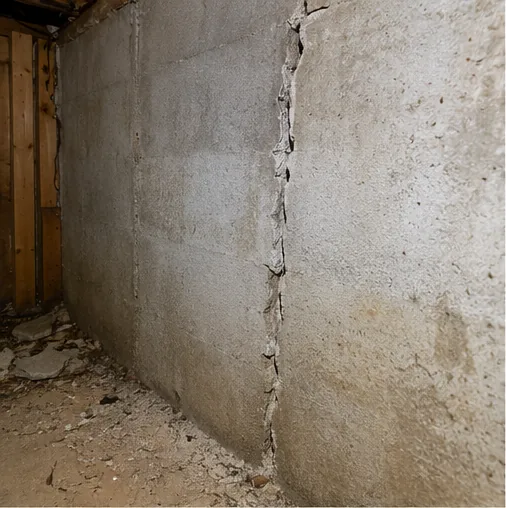
Bowing and horizontally cracked basement foundation wall
Free 2-Minute Quote

Concerned about this? Get it inspected.

This finding is covered by our standard 120-point inspection. Get your free quote, choose a time, and add thermal imaging or mold testing to map what's hidden.

Signs & Symptoms

What it looks like.

The warning signs we document and that you can watch for.

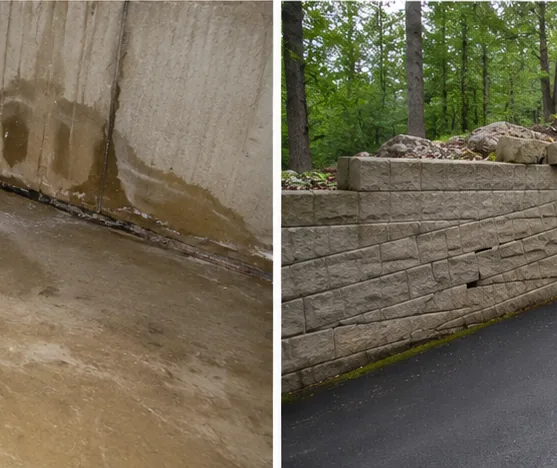
Retaining wall and foundation wall with water staining
Signs

What to look for

A visible curve or inward lean when you sight along the wall, horizontal cracking at the point of maximum bow, blocks that are shifted or sheared along a joint, gaps where the wall meets the floor joists, and rotation at the top of the wall. Doors and floors above may show distortion. A string line or level held against the wall reveals deflection the eye can miss.

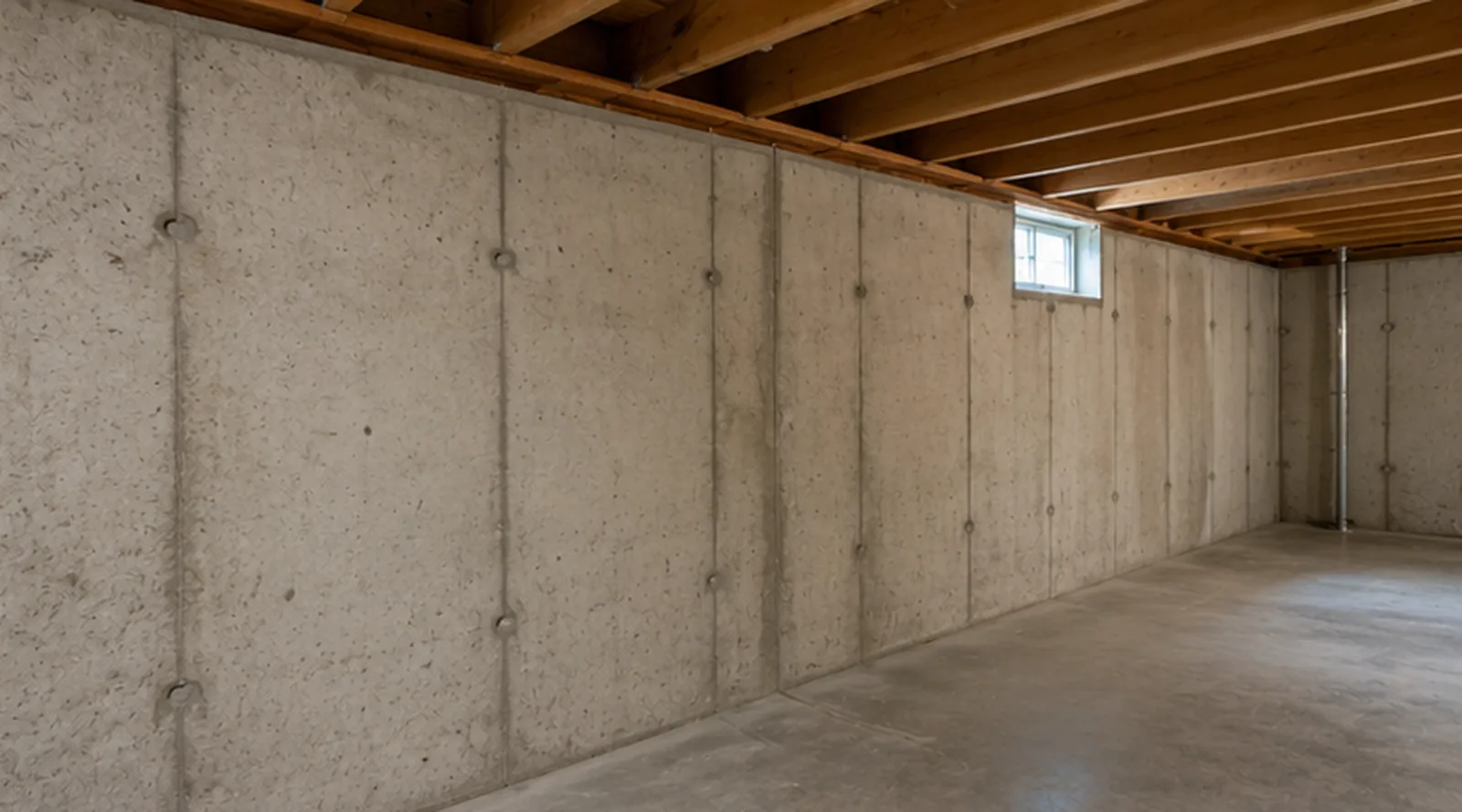
Foundation wall checked for inward bowing during a Hutchinson home inspection
Causes

Why it happens

Excessive lateral pressure from expansive clay soil that swells with moisture, hydrostatic pressure from groundwater, and frost pressure when saturated soil freezes and expands. Poor exterior drainage that keeps the soil wet, over-compacted or heavy backfill, and surcharge loads (driveways, vehicles, decks) close to the wall all increase the force. Older block walls with no reinforcement bow more readily than poured walls.

Bowing basement foundation wall inspected in Hutchinson, MN
Risk

If it's ignored

A bowing wall that keeps moving can shear, collapse, or require full excavation and replacement. It compromises the support for the floors above, opens wide moisture and radon pathways, and rapidly loses repair options as deflection grows — past a certain point, reinforcement is no longer enough and the wall must be rebuilt. This is the finding where early action saves the most.

Repair Options

How it's addressed.

Repair scales with deflection. Early bowing is often stabilized with carbon-fiber straps. Greater movement calls for steel I-beam braces or wall anchors that tie the wall to soil or footings further out. Severe displacement requires excavating, straightening or rebuilding the wall. In every case, exterior drainage and grading must be corrected so the pressure doesn't return. A structural engineer designs the fix; we measure and refer.

This is one of the findings covered by the full 120-point home inspection and documented under our foundation inspection. Related issues worth reading: Horizontal foundation cracks Stair-step cracks Foundation settlement Freeze-thaw damage.

Foundation wall checked for inward bowing during a Hutchinson home inspection
Common Variations

What turns up around Hutchinson.

Inward lean

A wall tipping in at the top under pressure from the soil behind it.

Mid-wall curve

A poured wall bowing as a unit, worst at the center of the span.

Sheared block

Block courses sliding along a mortar joint at the point of maximum bow.

Floor-line gaps

Separation where the top of the wall meets the joists above.

Active movement

Fresh cracking and debris that show the wall is still moving.

Hidden by finish

Bowing concealed behind basement drywall, flagged by indirect clues.

How We Inspect It

Four steps to a clear answer.

01

Sight the wall

We look down the length of each wall for curve and inward lean.

02

Measure deflection

A level or string line reveals how many inches the wall has moved.

03

Assess activity

Cracking, debris, and floor distress tell us if movement is ongoing.

04

Refer urgently

Significant bowing is flagged as a major finding and referred to an engineer.

Minnesota Notes

Why this matters here.

Minnesota's clay soils and deep frost make bowing a recurring finding in older Hutchinson and McLeod County basements, particularly unreinforced block walls. We see it most where snowmelt and roof runoff have soaked the soil against the wall for years. Because finished basements hide the wall, we look hard for floor-line gaps and moisture clues that hint at concealed movement.

Book Your Inspection
Bowing basement foundation wall inspected in Hutchinson, MN
FAQ

Bowing Basement Walls questions, answered.

How much wall bowing is too much?
As a rule of thumb, inward deflection beyond an inch or two over the wall height is a serious concern, and the limit for simple reinforcement narrows as it grows. We measure the deflection so an engineer can judge it precisely.
What makes a basement wall bow in Hutchinson?
Lateral pressure from expansive clay soil, groundwater, and frost — all made worse by poor drainage. Unreinforced block walls bow more easily than poured concrete.
Is a bowing wall an emergency?
It can be. A wall that is actively moving, severely deflected, or showing fresh shearing needs prompt engineering attention. A slightly bowed, stable wall may be reinforced on a planned basis.
Can a bowing wall be straightened?
Sometimes. Wall anchors and braces can halt movement and gradually pull a wall back over time; severe cases need excavation and rebuilding. The drainage that caused it must always be corrected.
Can you detect bowing behind a finished basement?
Not directly, but we look for floor-line gaps, distorted doors, and moisture, and use thermal imaging where available to flag areas that warrant opening up for evaluation.
Related defects & inspections

Explore related findings in the Defect Library: Horizontal foundation cracks Stair-step cracks Foundation settlement Freeze-thaw damage. See how we document it in the foundation inspection and the full 120-point home inspection, and add mold testing or thermal imaging when hidden moisture is suspected. We serve Hutchinson and McLeod County.

Get a straight answer about your home.

Get Your Free Instant Quote
📞 Call Free Instant Quote