Sign
Rusted, lifted flashing
Metal pulling away from the masonry, rust streaks, and cracked sealant at the counter flashing are the first visible signs.
The seam where the chimney meets the roof is one of the most common leak points on a Minnesota home — and one of the slowest to reveal itself. Here's how flashing fails, the signs, and how we check it.
Flashing and the chimney are checked on every 120-point inspection, from the roof and from inside the attic. Get a free quote and book online.
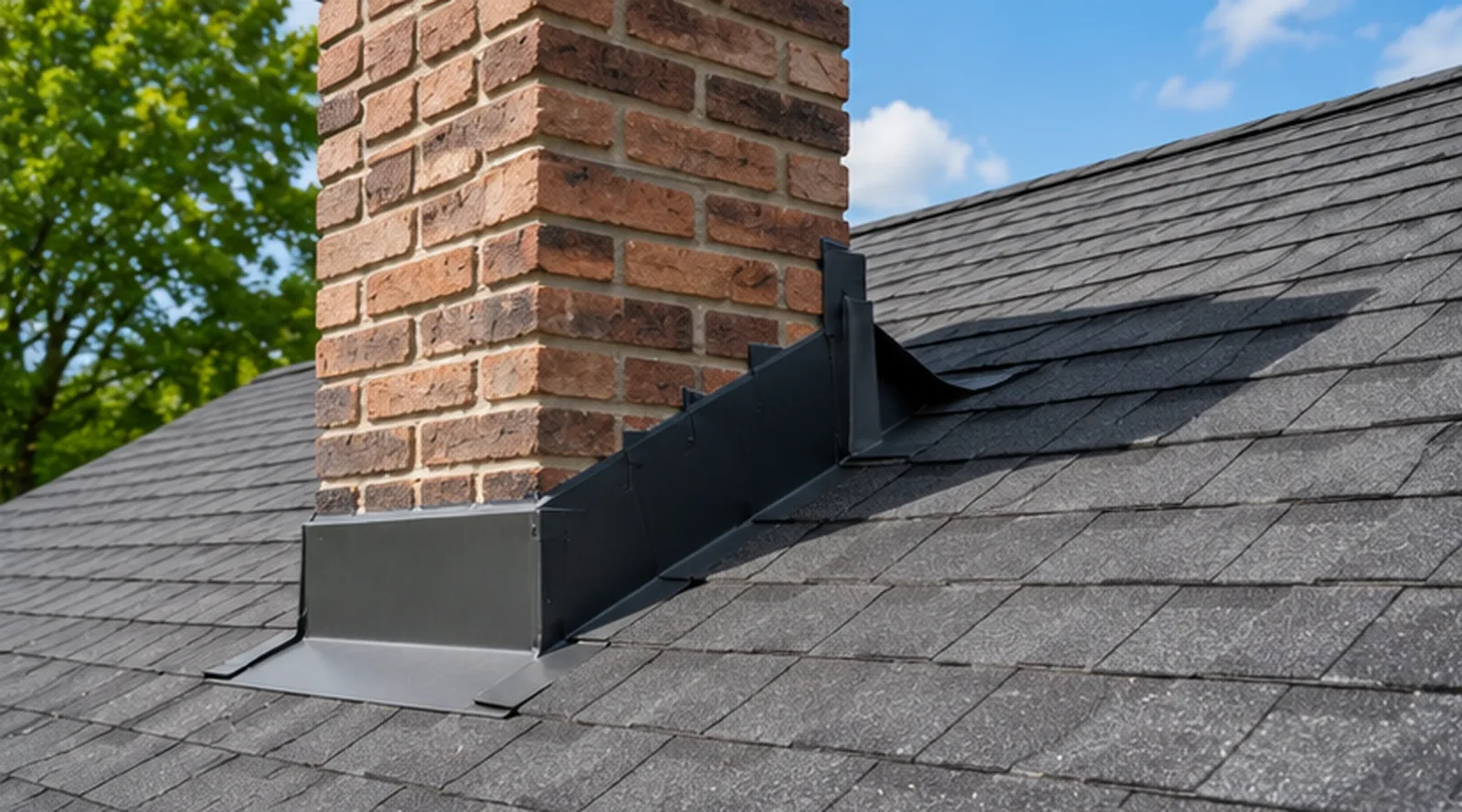
Flashing is the system of overlapping metal that waterproofs the joint where the chimney punches through the roof. Step flashing weaves up under each course of shingles, counter flashing is set into a groove in the masonry to cap it, and on the uphill side a cricket or saddle diverts water around the chimney. When it all overlaps correctly, water sheds away. When any layer fails, water gets in.
In Hutchinson, freeze-thaw cracks the mortar and caulk that seal the counter flashing, ice and snow pile against the chimney, and older homes often have flashing that was simply tarred over instead of properly layered. The result is a slow leak that hides for seasons. We evaluate it during the roof inspection portion of the 120-point inspection.
Get Your Free Quote →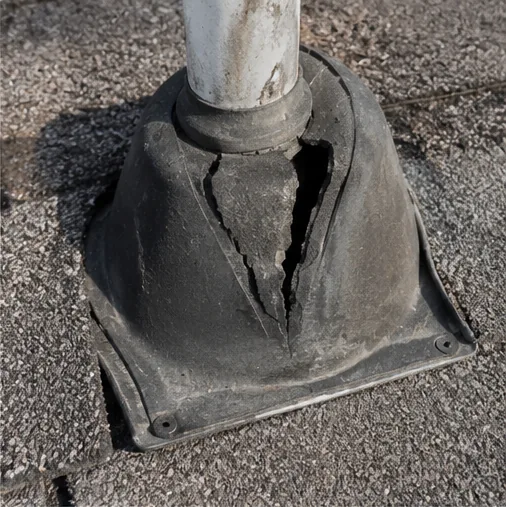
The clues appear both at the chimney and far from it.
Metal pulling away from the masonry, rust streaks, and cracked sealant at the counter flashing are the first visible signs.
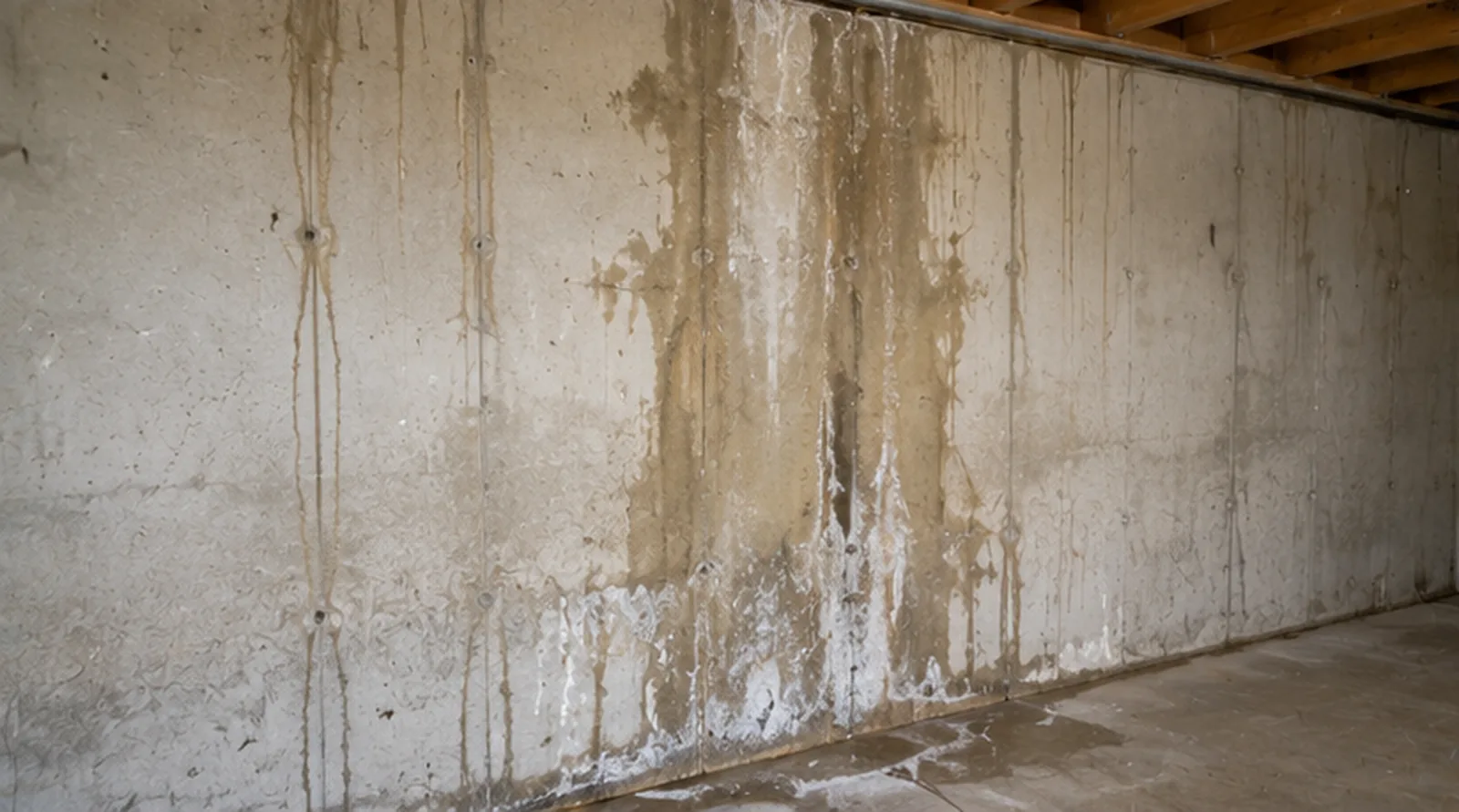
Brown staining near the chimney chase, sometimes appearing on a floor below where water traveled along framing.
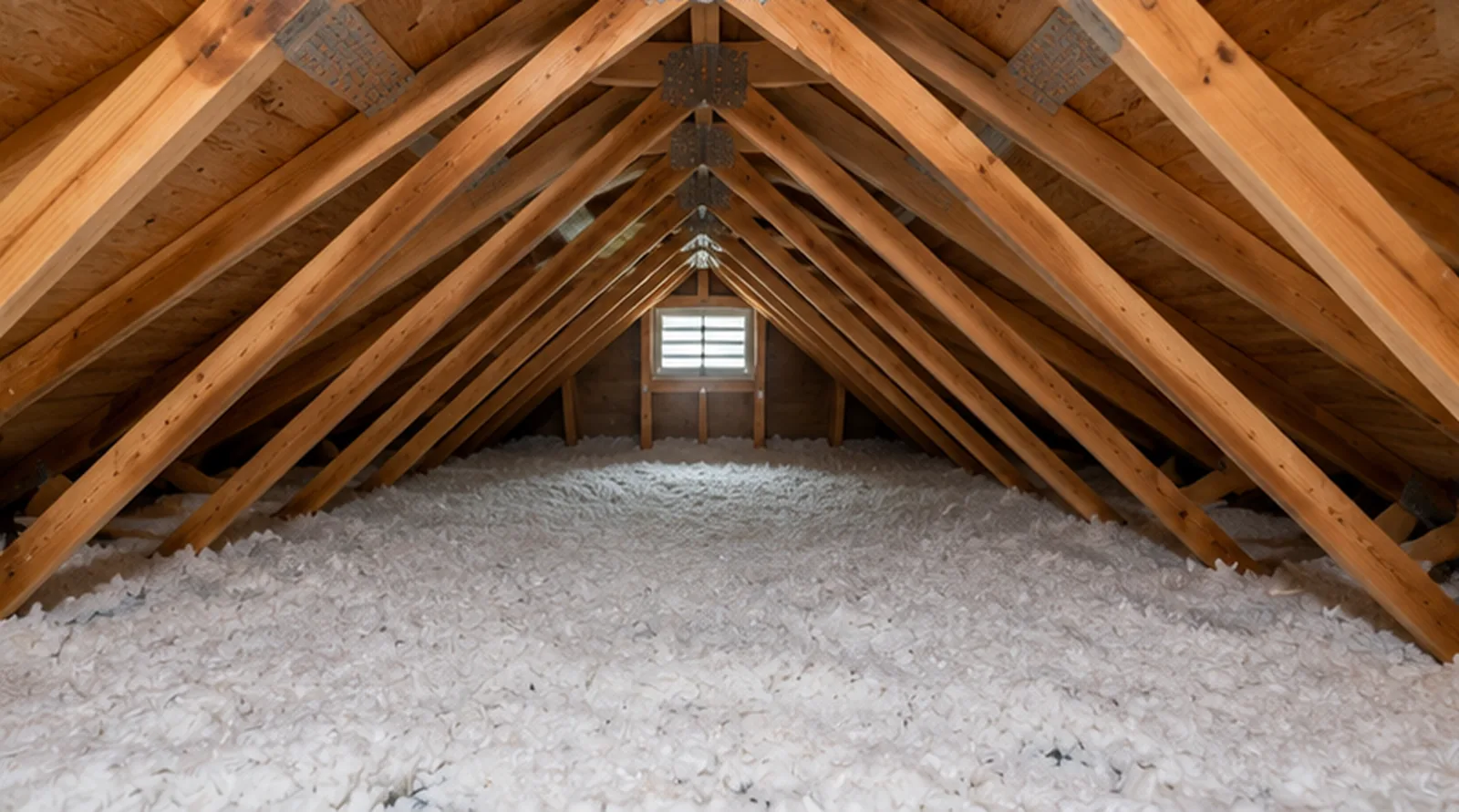
Stained or wet sheathing and framing around the chimney in the attic — the leak's true source, often hidden until inspected.
Caulk and mortar at the counter flashing dry out and split under freeze-thaw, opening a gap.
Old roofs often have flashing slathered with roof cement instead of proper step and counter pieces.
Wide chimneys without a saddle trap snow and water on the uphill side, overwhelming the flashing.
Old galvanized flashing rusts through, especially where ice and snow sit against it all winter.
Crumbling brick and crown cracks let water behind the flashing; tied to freeze-thaw damage.
Water forced behind the flashing during ice-dam conditions at the chimney.
From the roof or a ladder we check step, counter, and saddle flashing for rust, lift, and failed sealant.
We examine the crown, cap, and brick for cracks and spalling that let water behind the flashing.
Inside we look for stained or damp sheathing and framing around the chimney — the leak's origin.
Findings are photographed and prioritized in your 24-hour report with the corrective path explained.
Flashing leaks overlap with roof leak signs, asphalt shingle damage, ice dams, and attic mold on sheathing. See how we evaluate the roof in our roof inspection and attic inspection, or browse the full defect library and complete home inspection. We serve Hutchinson and McLeod County.