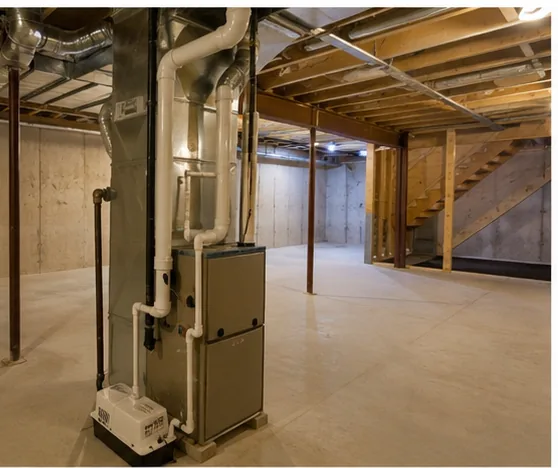
Signs
Flame & soot
A burner flame that flickers or shifts when the blower kicks on, soot streaking, a strong odor, or visible cracking and rust on the exchanger metal are classic warning signs.
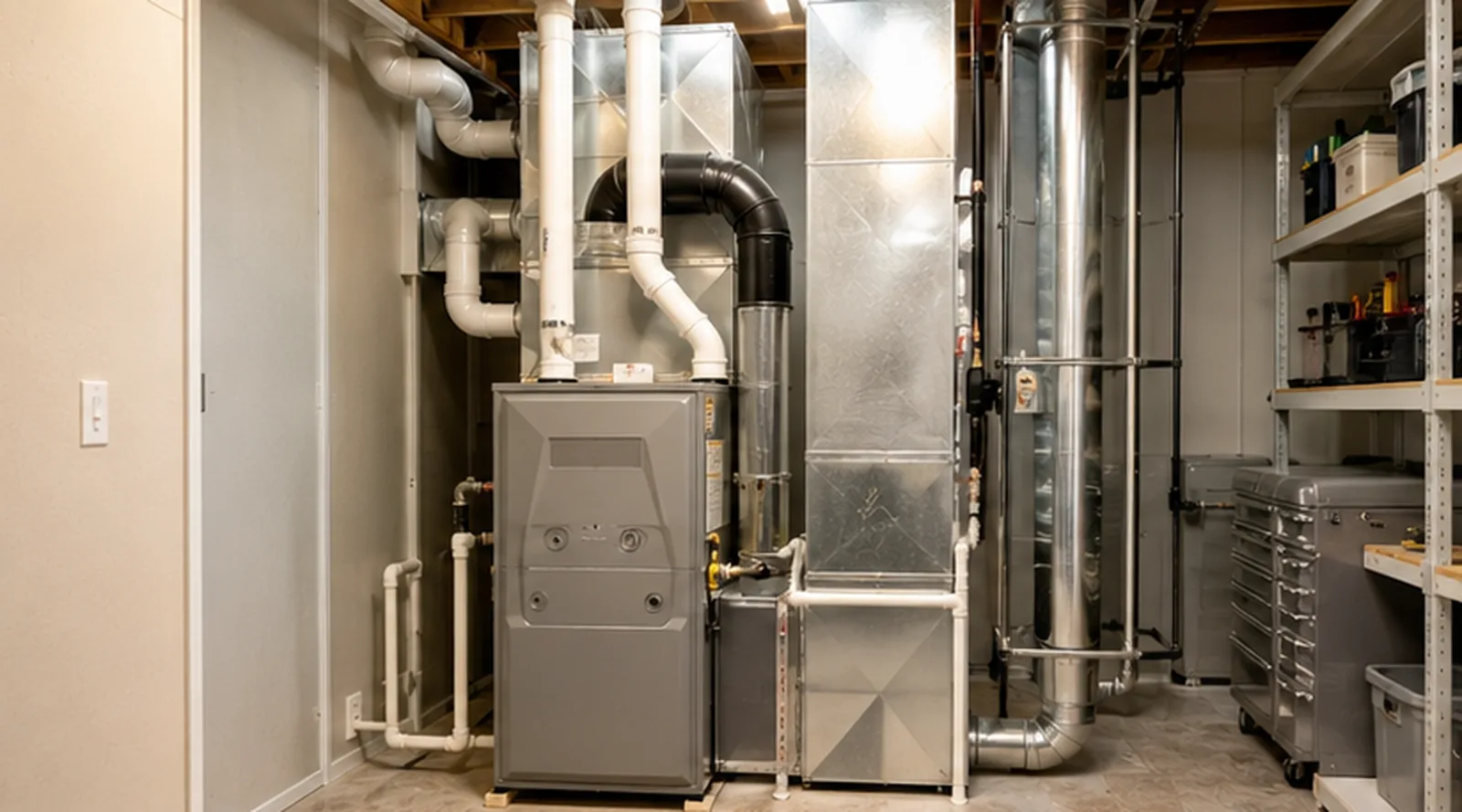
It's the one furnace defect that's a safety problem first and a money problem second. A hairline crack in the wrong place can send carbon monoxide into the air your family breathes.
Every standard inspection screens the furnace for the conditions that lead to a cracked heat exchanger. Get your free quote, pick a time, and book online in minutes.
Inside every gas furnace is a heat exchanger — a sealed metal chamber where the burner flame heats the metal, and your home's air is blown across the outside of that metal to warm it. The combustion gases stay sealed on one side; the air you breathe stays on the other. A crack breaks that seal. When it does, exhaust gases — including odorless, colorless carbon monoxide — can mix into the heated air circulating through the house.
It's the defect that turns a routine furnace into a genuine hazard, and it's exactly why the HVAC inspection treats heating as a safety system, not just a comfort one. A suspected crack is among the most important findings we report.
Get Your Free Quote →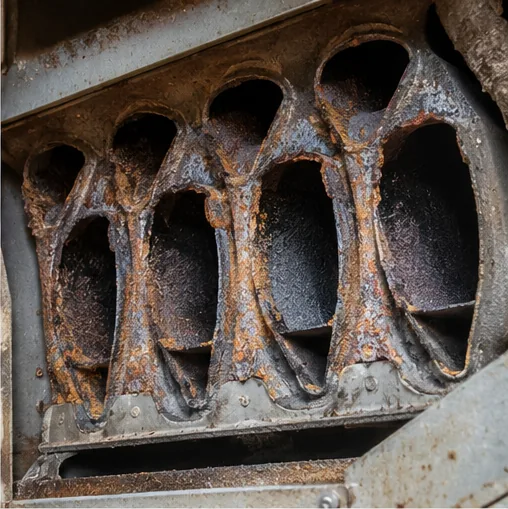
No single sign is proof, but together they tell us when to flag the furnace for a specialist.
A burner flame that flickers or shifts when the blower kicks on, soot streaking, a strong odor, or visible cracking and rust on the exchanger metal are classic warning signs.
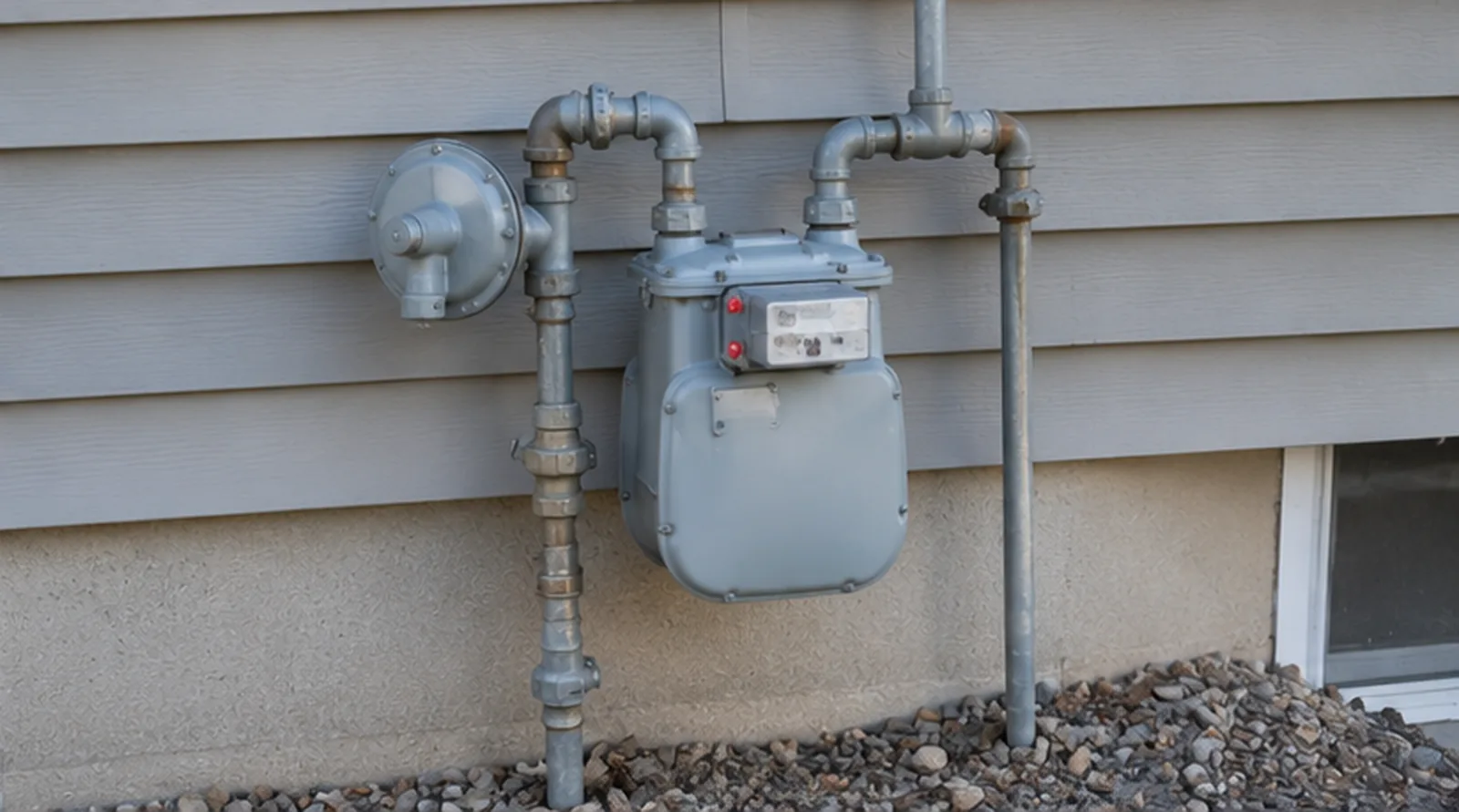
Years of expanding and contracting through Hutchinson's long heating season fatigue the metal until it cracks — especially on older or hard-run furnaces.
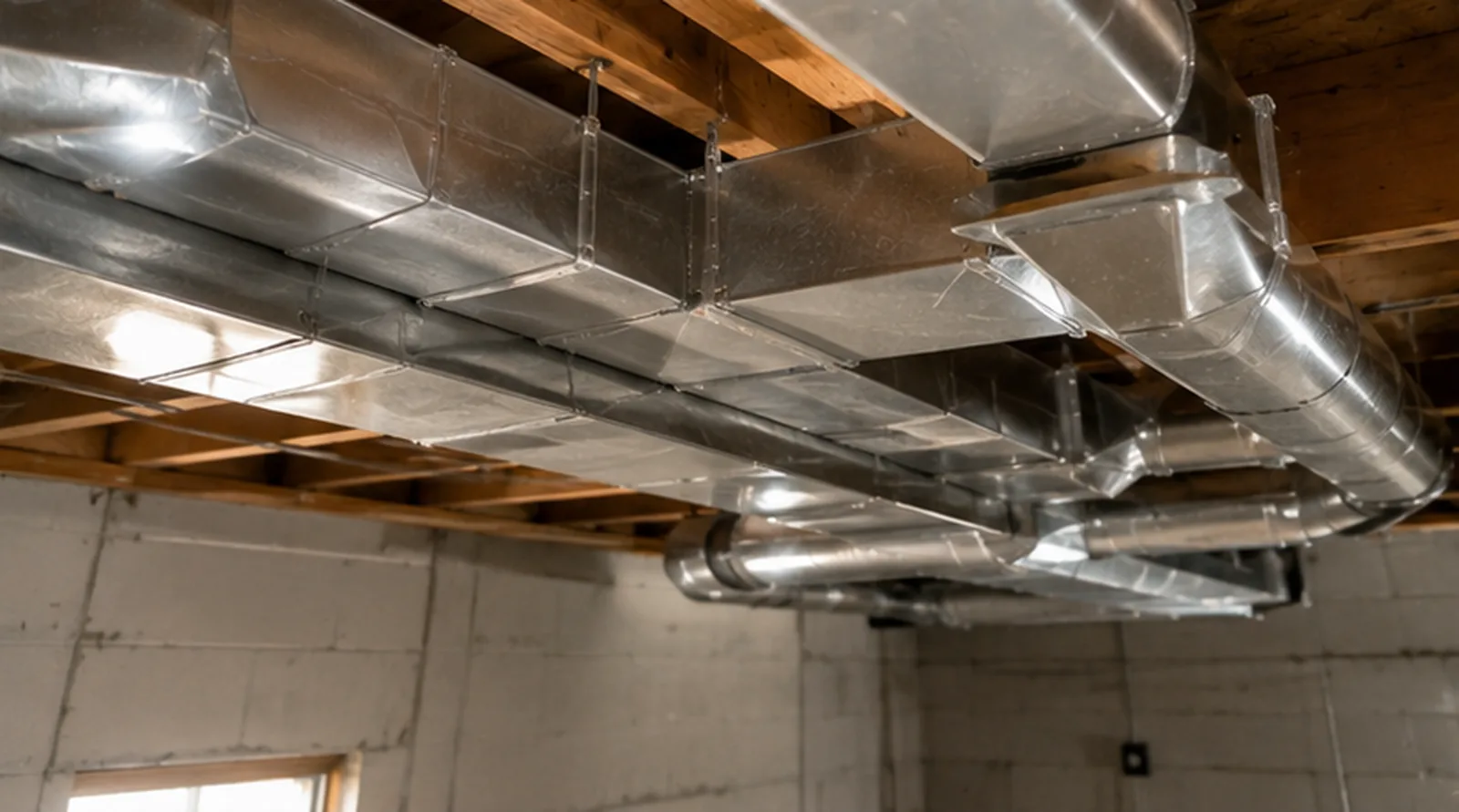
Dirty filters, closed registers, and undersized ducts trap heat in the exchanger, overheating the metal and accelerating cracks.
CO is odorless and colorless. A cracked exchanger can release it into living space, causing headaches, illness, or worse — the reason this defect is treated as urgent.
In a Minnesota winter, homes are buttoned up tight against the cold, so any CO that escapes has nowhere to go and concentrates indoors.
Furnaces here run for months on end, so a crack that leaks during operation is leaking far more hours than in a milder climate.
Most cracked exchangers can't be safely repaired in place, so the finding often means budgeting for a furnace replacement.
Homes without working CO detectors have no early warning. We confirm detectors are present and recommend them on every level.
Catching this before closing lets you negotiate or walk away rather than inherit a safety hazard and a major expense.
We run the furnace and watch the burner flame's behavior as the blower engages.
We inspect the visible heat exchanger, flue, and cabinet for cracks, soot, rust, and odor.
We verify carbon monoxide detectors are present and inspect venting and combustion air.
Any suspected crack is documented with photos and referred to a licensed HVAC technician before closing.
When we flag a suspected cracked heat exchanger, the next step is a licensed HVAC technician who can inspect with a camera and combustion analyzer to confirm it. If the crack is real, the furnace should not be run until it's addressed. Because the heat exchanger is the heart of the unit, repair usually isn't practical or safe — replacement of the furnace is the typical outcome.
We don't quote those costs; we give you a clearly documented finding and the urgency it deserves so you and your agent can act on it before closing. In the meantime, working CO detectors are essential.
Get Your Free Quote →
A cracked heat exchanger usually shows up in an older system. Read about the aging furnace, no furnace maintenance, improper venting, and dirty ductwork. See the full Defect Library, our HVAC inspection, or everything in a home inspection. We serve Hutchinson and McLeod County.