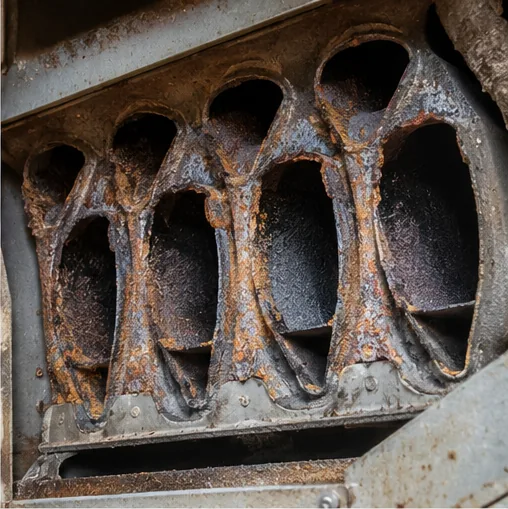
Signs
Disconnected, sloping flues
A flue that's loose, separated at a joint, or pitched downward instead of up can't carry exhaust outside reliably.
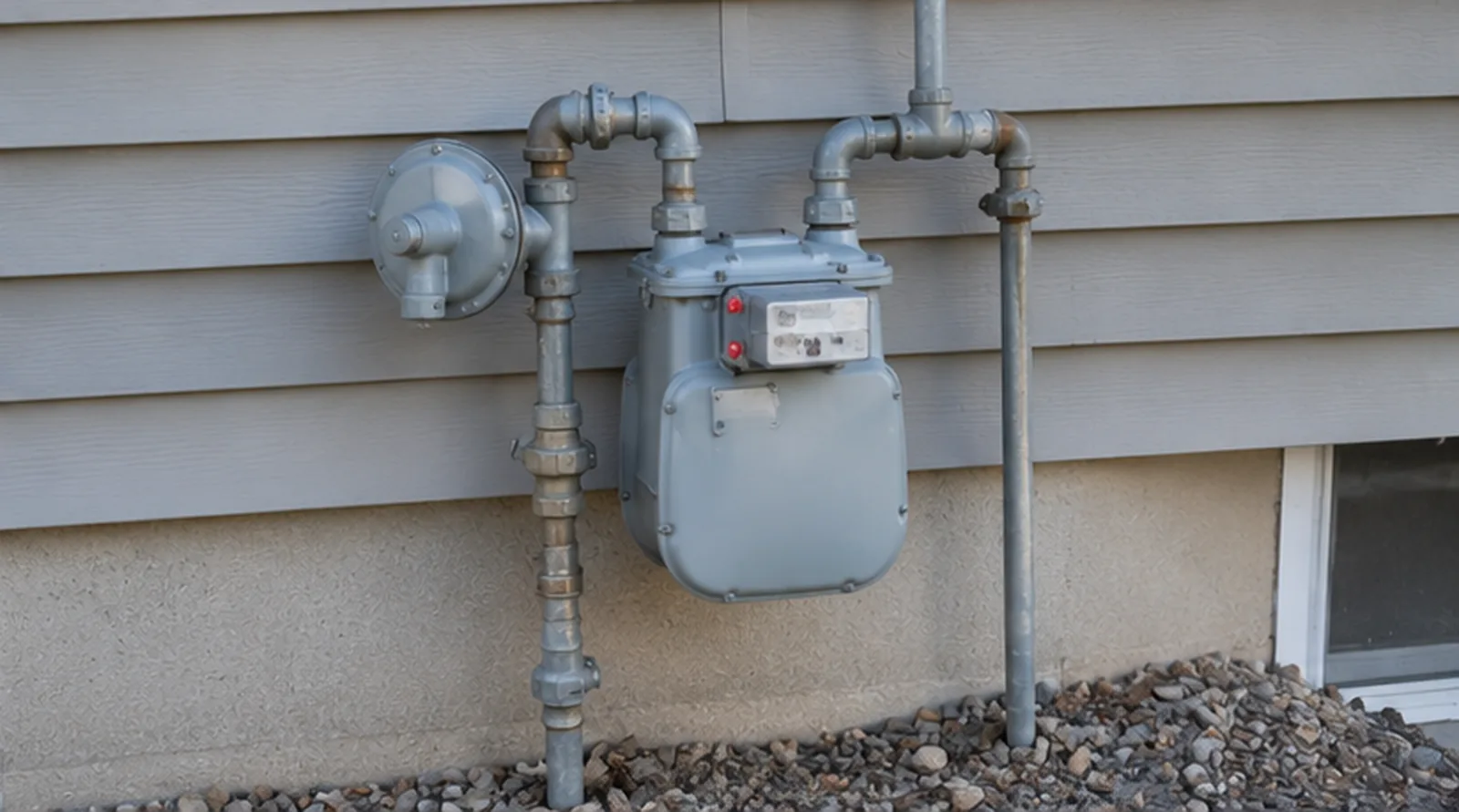
A furnace or water heater is only as safe as the flue that carries its exhaust outside. When venting fails, combustion gases — including carbon monoxide — can spill back into the house.
Every standard inspection checks the venting and combustion air for fuel-burning appliances. Get your free quote, pick a time, and book online in minutes.
Every gas furnace and water heater produces exhaust that must be carried safely outdoors through a flue or vent. Proper venting means the right material, a continuous upward slope, secure connections, adequate combustion air, and a termination point in the right location. "Improper venting" is any break in that chain: a disconnected or back-pitched flue, undersized or wrong-material pipe, a blocked vent, or a furnace starved of combustion air.
When venting is wrong, exhaust can backdraft — flow back into the home instead of out. Because that exhaust contains carbon monoxide, venting is treated as a safety system during the HVAC inspection.
Get Your Free Quote →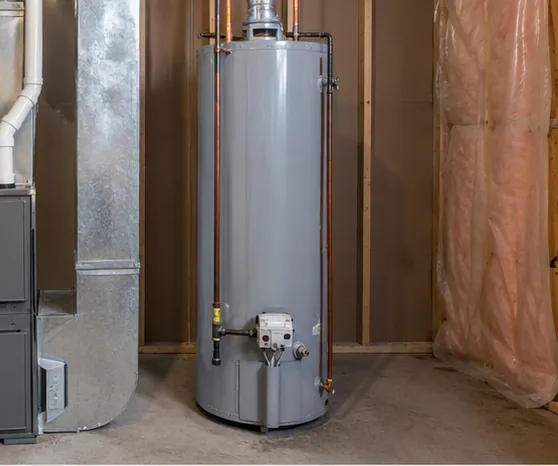
Some signs are visible at the flue; others appear as moisture or odor near the appliance.
A flue that's loose, separated at a joint, or pitched downward instead of up can't carry exhaust outside reliably.
Rust at the flue collar, soot, and condensation or moisture stains near the appliance suggest exhaust isn't venting properly.
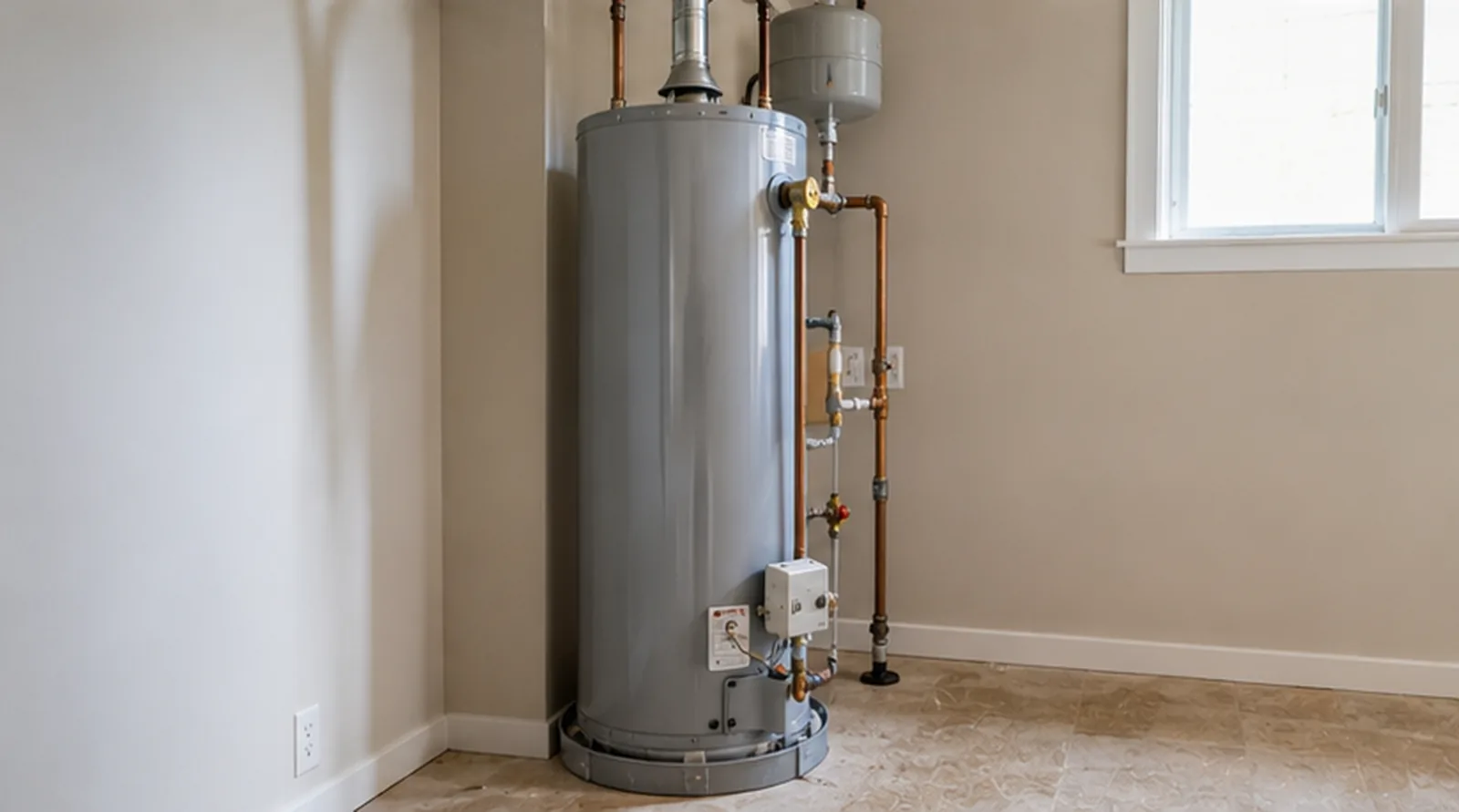
Amateur installs, the wrong vent material, blockages, and energy-tightened homes without enough combustion air all cause venting failures.
Improper venting can spill carbon monoxide into living space — odorless, colorless, and dangerous, which makes it an urgent finding.
Minnesota homes are closed tight against the cold, so any backdrafted exhaust concentrates indoors with nowhere to escape.
Powerful exhaust fans and tight homes can pull exhaust back down the flue, defeating venting that looks fine at a glance.
Exhaust spilling indoors carries water vapor that condenses, corroding equipment and feeding mold near the appliance.
Furnaces and water heaters sharing a flue can interfere with each other when venting is undersized or wrong.
Homes without working CO detectors lose their early warning. We confirm detectors and recommend them throughout.
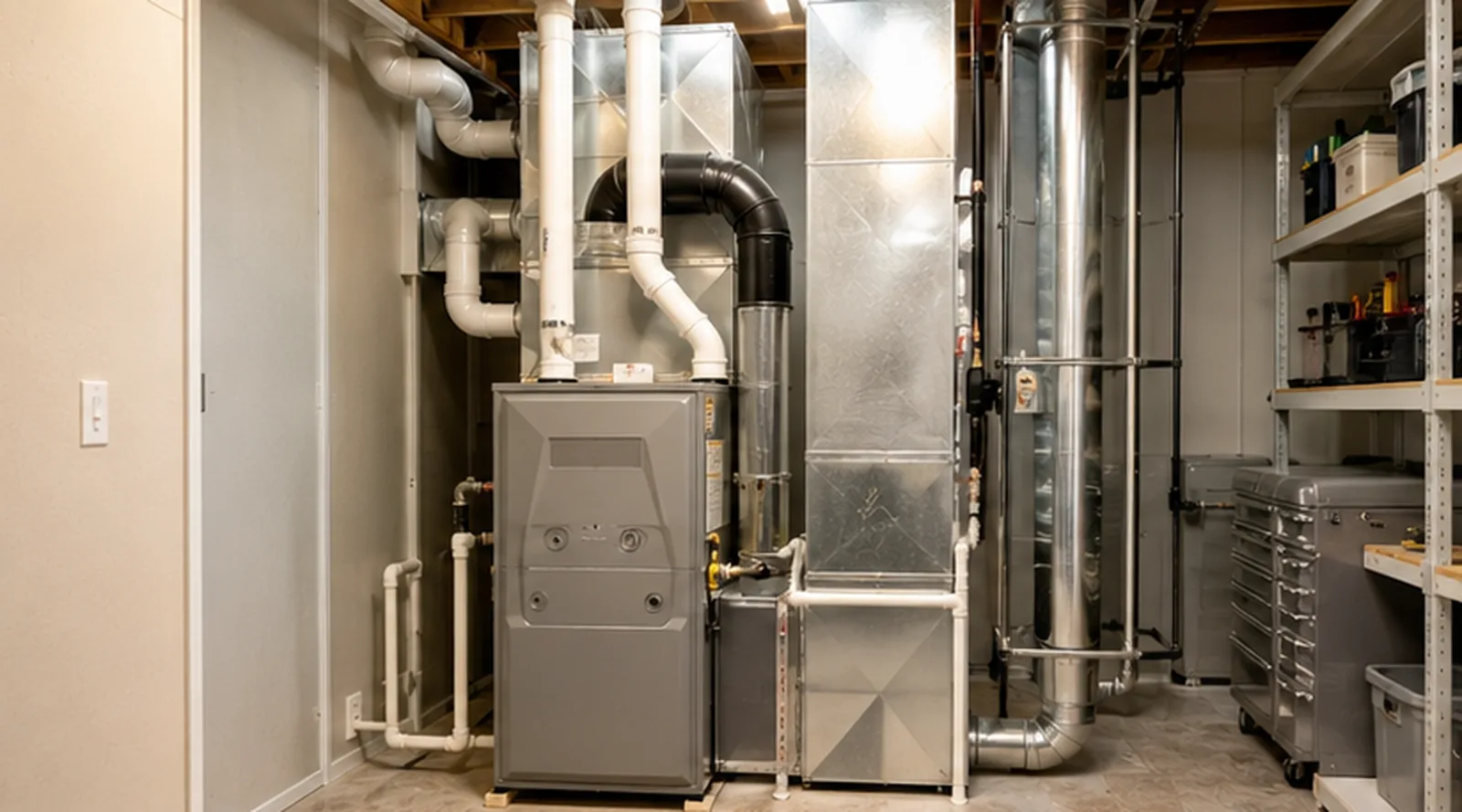
We follow the furnace and water heater flues, checking material, slope, support, and connections.
We inspect for corrosion, soot, moisture, and signs of backdrafting at the appliance and flue.
We verify the space has adequate combustion air for the appliances installed there.
Improper venting is documented with photos and referred to a licensed technician in your 24-hour report.
Because of the carbon monoxide stakes, venting problems should be corrected promptly by a licensed HVAC or plumbing professional. Depending on what's found, that can mean reconnecting and properly supporting a flue, replacing the wrong vent material, clearing a blockage, or adding combustion air to the mechanical space. A combustion analyzer can confirm the appliances are venting safely once the work is done.
We don't quote repair costs. We give you a clearly documented, photographed finding with the urgency it deserves so it gets fixed before you rely on the equipment through a Minnesota winter — and we always recommend working CO detectors in the meantime.
Get Your Free Quote →Venting problems often accompany other furnace issues. Read about the cracked heat exchanger, the aging furnace, no furnace maintenance, and dirty ductwork. See the full Defect Library, our HVAC inspection, or everything in a home inspection. We serve Hutchinson and McLeod County.