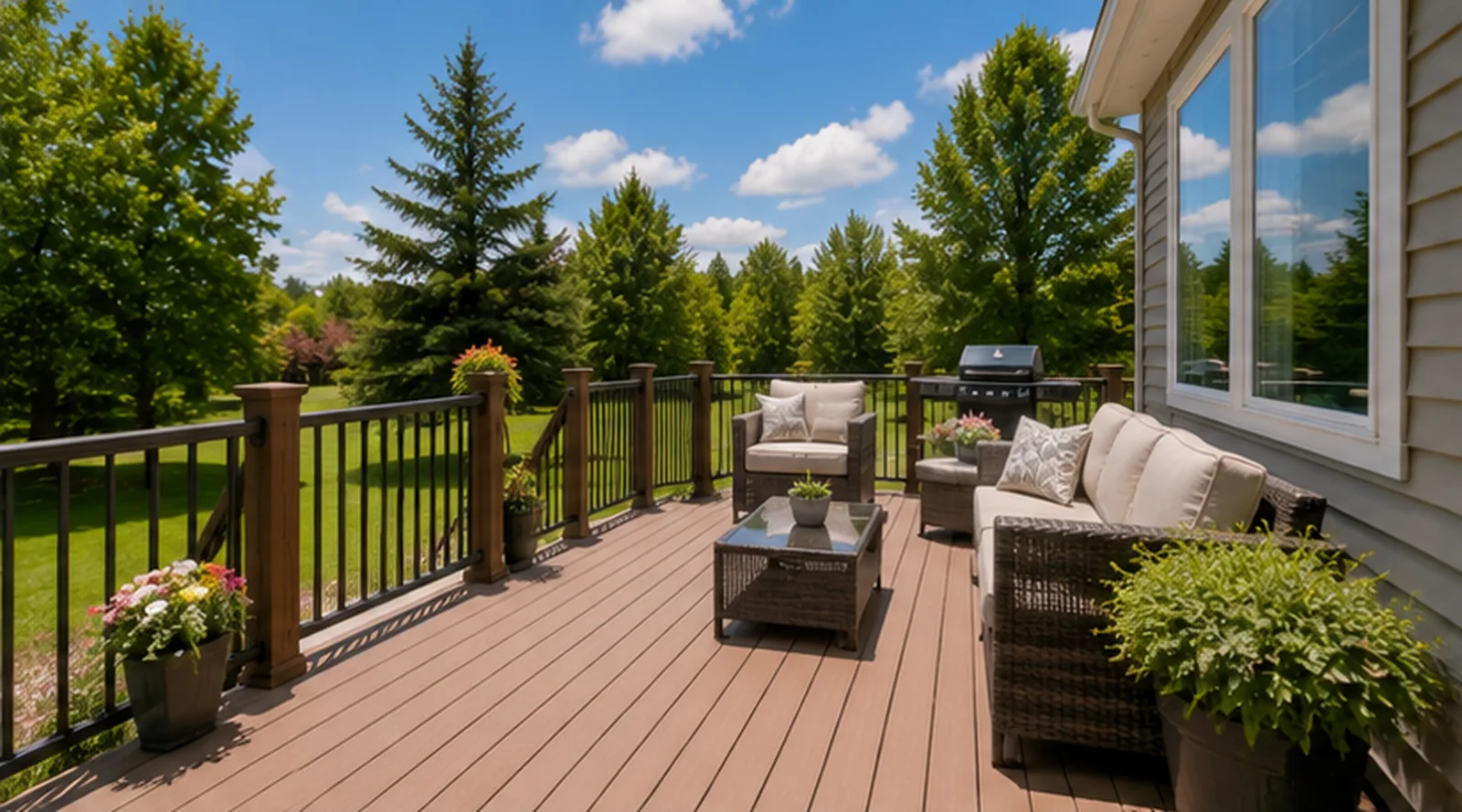
Signs
Nails & gaps
Nails instead of bolts, too few fasteners, gaps at the ledger, or the deck pulling away from the house are immediate red flags.
A deck can look perfectly sound and still be one barbecue away from collapse. The connection to the house — the ledger — is where most deck failures begin.
Every standard inspection includes the deck, its attachment, railings, and framing. Get your free quote, pick a time, and book online in minutes.
The ledger is the horizontal board bolted to the house that the deck's joists hang from. It carries a large share of the deck's load — and everyone standing on it. For that connection to be safe, the ledger must be fastened to the home's rim joist with properly sized through-bolts or lag screws (not nails), and it must be flashed so water can't get trapped behind it. "Deck ledger issues" covers any failure of that detail: nailed-on ledgers, too few fasteners, missing flashing, and rot at the connection.
Because a failed ledger is the leading cause of deck collapses, we treat it as a priority safety item in the exterior inspection rather than a routine detail.
Get Your Free Quote →The danger signs are at the connection between deck and house.
Nails instead of bolts, too few fasteners, gaps at the ledger, or the deck pulling away from the house are immediate red flags.

Without flashing, water sits behind the ledger and rots both the board and the home's rim joist, weakening the connection.
Bounce, sway, or movement near the house side, and rusting or backing-out fasteners, all suggest the ledger is losing its grip.
A failed ledger can drop a loaded deck without warning — the most serious outcome and the reason this is a top safety check.
Heavy Minnesota snow adds significant weight to a deck all winter, stressing a marginal ledger connection.
Water trapped behind an unflashed ledger freezes, thaws, and rots the wood and rim joist faster each year.
Rot at the ledger can spread into the home's rim joist, turning a deck repair into a structural one.
Many decks were built or modified without permits or current attachment practices, leaving unsafe ledgers behind.
An unsafe deck is a liability you'd inherit at closing — far better to identify and correct it first.
We check how the ledger is attached — bolts versus nails, spacing, and condition of the fasteners.
We look for proper flashing and signs that water has been getting behind the ledger.
Where safe, we check the ledger and adjacent wood for softness and decay, and feel for movement.
Any unsafe attachment is documented with photos and flagged for a contractor in your 24-hour report.
When we flag a ledger concern, a licensed contractor should correct it before the deck sees heavy use. Depending on what's found, that can mean adding properly sized through-bolts or lag screws, installing flashing to keep water out, and replacing rotted wood. If the home's rim joist has rotted, the repair may extend into the structure. The goal is a deck that's solidly and safely tied to the house.
We don't quote repair costs. We give you a clear, photographed safety finding so you and your agent can have it corrected — and so no one is standing on a deck that's holding on by nails.
Get Your Free Quote →Deck problems share roots with other exterior defects. Read about rotted wood trim, failing caulk & seals, deteriorated siding, and negative grading. See the full Defect Library, our exterior inspection, or everything in a home inspection. We serve Hutchinson and McLeod County.