✓ InterNACHI® Master Certified ✓ 120-Point Inspection ✓ Reports in 24 Hours
📞 (320) 674-7553
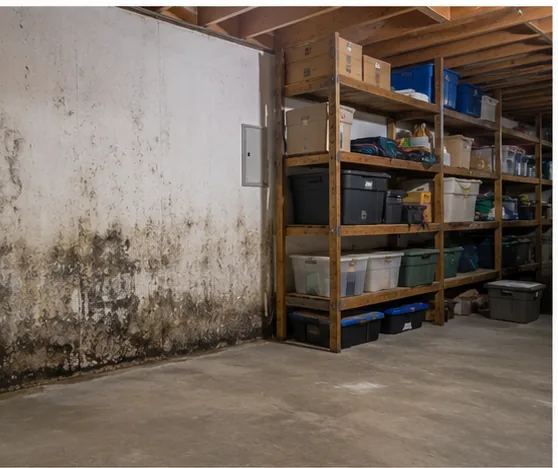
Mold growth on basement wall beside storage shelving
⬥ Hutchinson, MN · Mold & Moisture

Basement mold: the smell before the sight.

Mold in a basement usually announces itself as a musty smell long before you see it — often because it's growing behind the finished walls. We trace the moisture that feeds it.

★★★★★ 5-star rated✓ Same-day online scheduling✓ Walk-through included
What It Is

What basement mold actually is.

Mold is a fungus that grows wherever it finds moisture, a food source (drywall, wood, dust), and time. Basements offer all three: they're cool, often damp, and finished with the organic materials mold feeds on. Basement mold ranges from visible patches on walls and stored items to hidden colonies inside wall cavities behind drywall — which is why the musty smell often arrives before any sign you can see.

Why it matters. Basement mold sits at the intersection of moisture, air quality, and home value. It signals a water problem that needs solving, it can affect the health of sensitive occupants, and on a real-estate transaction it raises questions that testing answers. In Hutchinson basements, where seepage and humidity are common, ruling mold in or out is one of the most useful things an inspection clarifies.

Get Your Free Quote
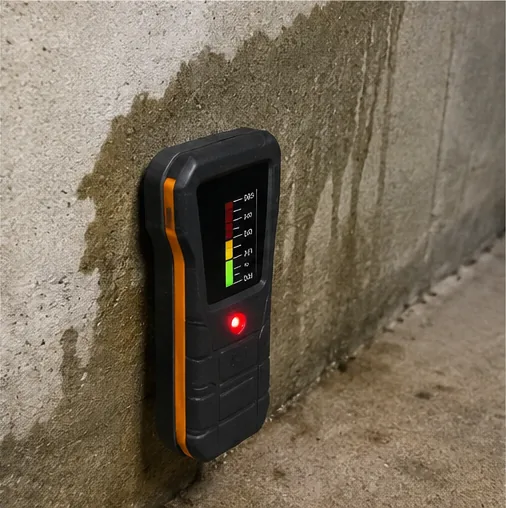
Moisture meter reading a damp stained foundation wall
Free 2-Minute Quote

Concerned about this? Get it inspected.

This finding is covered by our standard 120-point inspection. Get your free quote, choose a time, and add thermal imaging or mold testing to map what's hidden.

Signs & Symptoms

What it looks like.

The warning signs we document and that you can watch for.

Mold growth on basement wall beside storage shelving
Signs

What to look for

A persistent musty, earthy odor (often the first and strongest clue), visible growth — black, green, or white patches — on walls, framing, carpet, or stored items, staining and efflorescence marking past water, peeling paint and warped paneling, and high humidity. Behind finished walls, the smell and elevated moisture readings may be the only indicators without opening up.

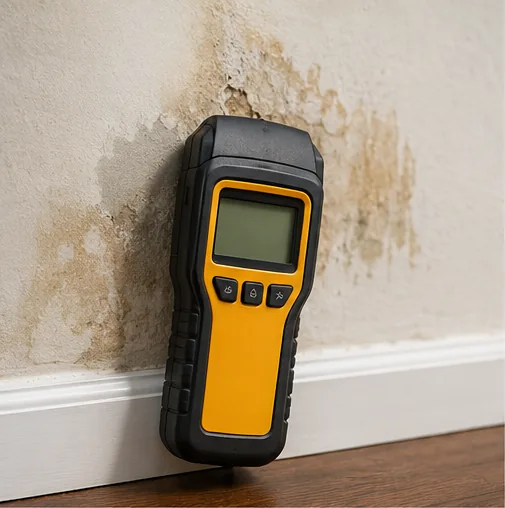
Handheld moisture meter testing a mold-stained interior wall
Causes

Why it happens

Chronic moisture is the root: basement seepage, a leaking foundation, high humidity, condensation on cool surfaces, plumbing leaks, and past flooding that was never fully dried. Finishing a basement over a damp foundation — drywall and framing against a wall that still takes on water — is a classic recipe, trapping moisture where mold thrives unseen.

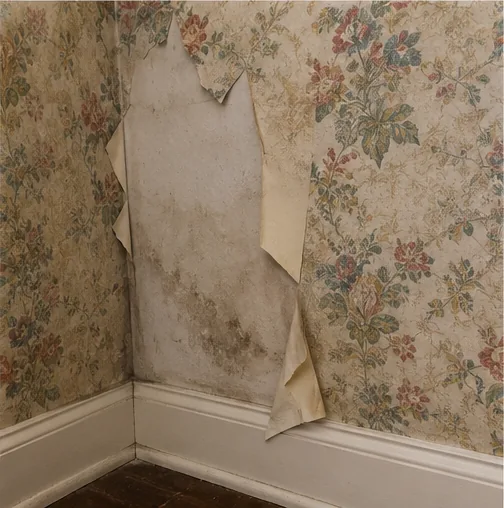
Water-stained interior wall with peeling vintage wallpaper
Risk

If it's ignored

Mold can trigger allergic and respiratory symptoms, especially in sensitive individuals, and degrades indoor air quality throughout the home as basement air circulates upward. It damages finishes, framing, and stored belongings, and its presence usually means an unresolved moisture problem that will keep feeding it. Painting or covering mold without fixing the water source lets it return and spread.

Repair Options

How it's addressed.

The principle is fix the water, then remove the mold. Stop the moisture source — seepage, humidity, leaks — through grading, drainage, sump, and dehumidification. Small areas on hard surfaces can be cleaned; larger or hidden growth, and porous materials like drywall and carpet, generally require professional remediation that contains and removes the affected materials. Testing identifies the type and extent. We document moisture and visible growth and recommend mold testing.

This is one of the findings covered by the full 120-point home inspection and documented under our moisture inspection. Related issues worth reading: Bathroom mold Basement seepage Wet crawlspace Efflorescence.

Mold growth on basement wall beside storage shelving
Common Variations

What turns up around Hutchinson.

Musty odor

The earthy smell that signals mold, often before any visible sign.

Hidden behind drywall

Colonies growing in wall cavities of finished basements, unseen.

Seepage-fed growth

Mold thriving where a leaking foundation keeps materials damp.

High humidity

Damp basement air condensing and feeding surface mold.

Past flooding

Growth from a flood that was never fully dried out.

Porous materials

Carpet, drywall, and paneling that hold moisture and harbor mold.

How We Inspect It

Four steps to a clear answer.

01

Follow the smell

We investigate musty odors that point to active mold and moisture.

02

Check moisture

We take readings and look for seepage and humidity feeding growth.

03

Inspect surfaces

We document visible growth on walls, framing, and stored items.

04

Recommend testing

Where mold is suspected or hidden, we recommend mold testing.

Minnesota Notes

Why this matters here.

Hutchinson's humid summers and snowmelt-driven seepage make basements a prime mold environment, and the regional habit of finishing basements over foundations that still take on water hides a lot of growth behind the drywall. We pay close attention to musty odors and elevated moisture in finished lower levels, where what you can't see matters most.

Book Your Inspection
Water-stained interior wall with peeling vintage wallpaper
FAQ

Basement Mold questions, answered.

Why does my basement smell musty but look clean?
Mold often grows out of sight — inside wall cavities of a finished basement or under flooring — so the musty odor and elevated moisture can be the only signs. We investigate the source and recommend testing.
What causes mold in a Hutchinson basement?
Chronic moisture: seepage, a leaking foundation, high humidity, condensation, plumbing leaks, or past flooding. Finishing a basement over a damp foundation is a common cause of hidden mold.
Is basement mold a health risk?
It can trigger allergic and respiratory symptoms, especially in sensitive people, and basement air circulates into the rest of the home. The extent depends on the type and amount, which testing identifies.
How is basement mold removed?
Fix the moisture source first, then remediate — clean small areas on hard surfaces, and professionally contain and remove larger or hidden growth and porous materials. Covering mold without fixing the water lets it return.
Do you test for mold during a home inspection?
Mold testing is a focused add-on we recommend when we find musty odors, moisture, or visible growth. It identifies the type and extent so remediation can be scoped properly.

Related defects & inspections

Explore related findings in the Defect Library: Bathroom mold Basement seepage Wet crawlspace Efflorescence. See how we document it in the moisture inspection and the full 120-point home inspection, and add mold testing or thermal imaging when hidden moisture is suspected. We serve Hutchinson and McLeod County.

Get a straight answer about your home.

Get Your Free Instant Quote
📞 Call Free Instant Quote