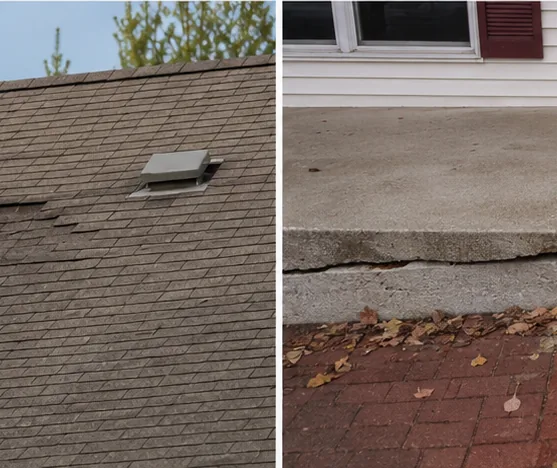
Sign
Frost on the sheathing
Winter condensation that freezes to the underside of the roof deck, then drips when it thaws — a classic stagnant-attic symptom.
Most roof and attic trouble in Minnesota — ice dams, mold, premature shingle failure — traces back to one thing: air that can't move from the soffits to the ridge. Here's how to spot it and how we test it.
Ventilation is checked on every 120-point inspection because it touches the roof, insulation, and moisture all at once. Get a free quote and book online.
A healthy attic vents from the bottom up: cool outdoor air enters at the soffits, rises as it warms, and exits at the ridge. That continuous flow keeps the roof deck cold in winter and exhausts the moisture that drifts up from kitchens, bathrooms, and the foundation. When the path is broken — vents blocked, no ridge exhaust, no intake — the attic becomes a stagnant box.
In Hutchinson that stagnation shows up fast. Warm, moist air condenses on cold sheathing and freezes; heat trapped under the roof melts snow and feeds ice dams; and the steady moisture invites mold on the sheathing. We evaluate ventilation as part of the full 120-point inspection and our dedicated attic inspection.
Get Your Free Quote →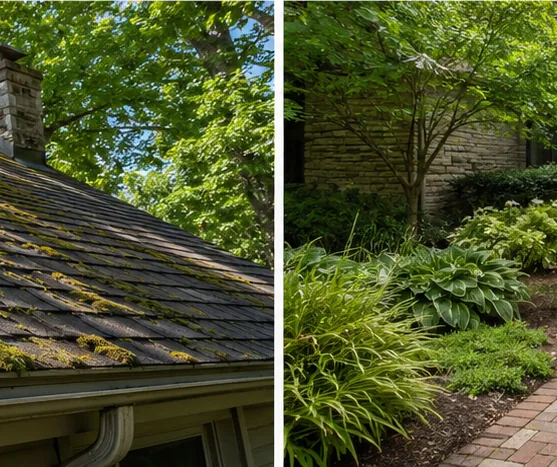
The symptoms show up on the roof, in the attic, and on your top-floor ceilings.
Winter condensation that freezes to the underside of the roof deck, then drips when it thaws — a classic stagnant-attic symptom.
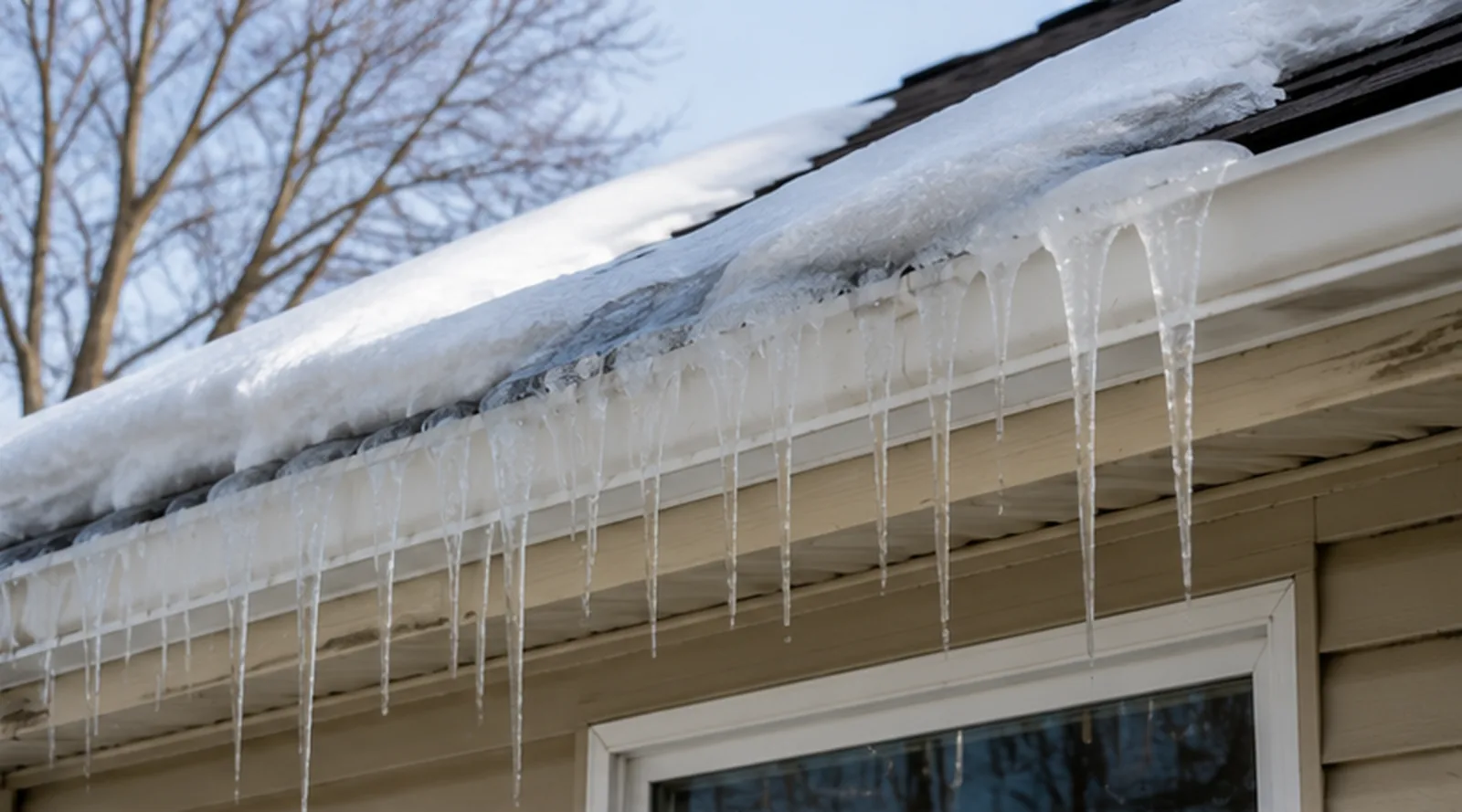
A warm attic from poor airflow melts roof snow that refreezes at the cold edge, the core mechanism behind ice dams.
Trapped summer heat bakes shingles from below, causing premature curling and granule loss that shortens roof life.
Insulation pushed into the eaves with no baffles to keep the intake channel open.
Missing or undersized ridge or roof vents, so air has no high point to escape.
Too much exhaust with too little intake (or vice versa) starves the airflow and short-circuits it.
Exhaust fans dumping warm, moist air into the attic instead of venting fully outdoors.
Soffit vents clogged with paint, debris, or pest screening that chokes the intake.
Combining ridge and powered or box vents that fight each other and pull air the wrong way.
We confirm soffit vents at the bottom and ridge or roof vents at the top, and that both are clear.
Inside the attic we check for an open channel at the eaves and look for missing baffles.
Frost, water stains, and mold on the sheathing tell us the air isn't moving and moisture is trapped.
Every finding is photographed and prioritized in your 24-hour report with a clear path to correction.
Ventilation ties into nearly every roof and attic issue. See ice dams, attic mold on sheathing, missing attic baffles, and ridge & soffit vent issues. Learn how we check the system in our roof inspection and attic inspection, or browse the full defect library and complete home inspection. We serve Hutchinson and McLeod County.