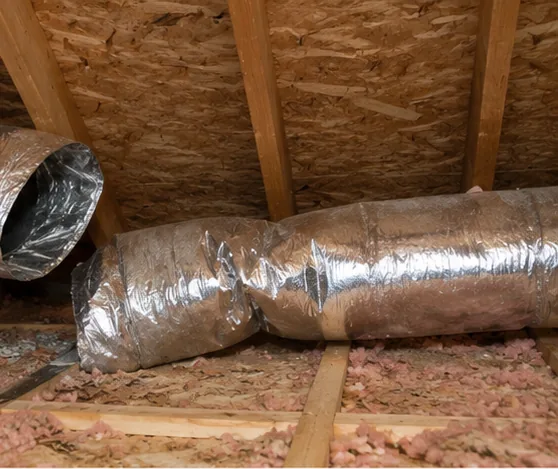
Sign
Insulation in the eaves
Insulation running right up to the roof deck with no channel held open — the classic sign baffles are absent.
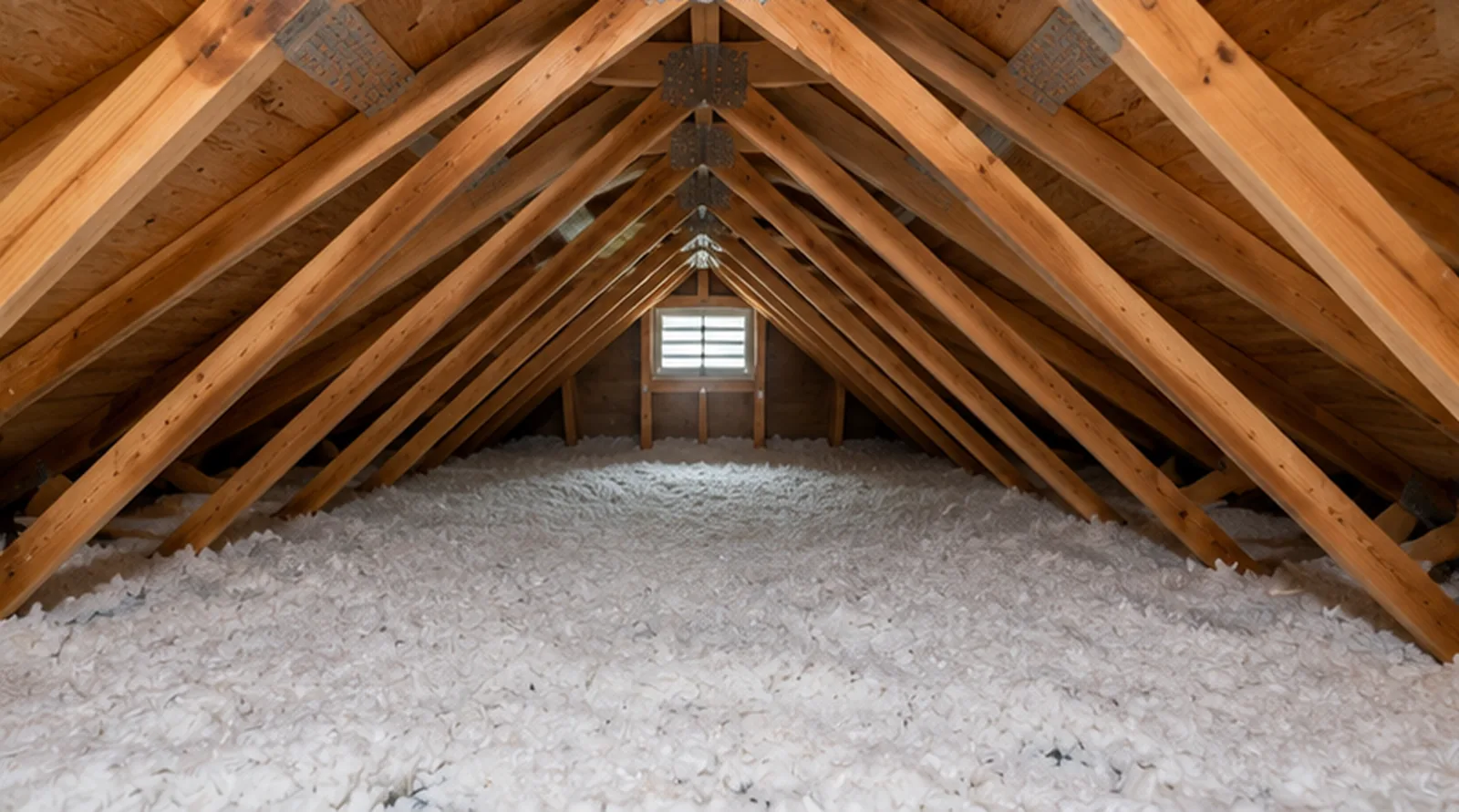
A baffle is a cheap plastic chute at the eaves — but without it, insulation smothers the soffit vents and the whole attic stops breathing. Here's why missing baffles drive ice dams and mold, and how we find them.
We check for baffles and confirm open intake at the soffits on every 120-point inspection. Get a free quote and book online.
A baffle — also called a rafter vent or insulation chute — is a simple channel stapled between the rafters at the eave. Its job is to hold insulation back and preserve a clear air gap so that intake air from the soffit vents can sweep up the underside of the roof deck toward the ridge. It's the bridge that connects soffit intake to the attic airflow path.
When baffles are missing, insulation slumps into the eave and plugs the soffit vents. The attic can no longer pull air from the bottom, so the soffit-to-ridge flow stalls — and that stagnation feeds ice dams, condensation and mold, and broader ventilation problems. Adding insulation without baffles often makes it worse. We check for them during the attic inspection in the full 120-point inspection.
Get Your Free Quote →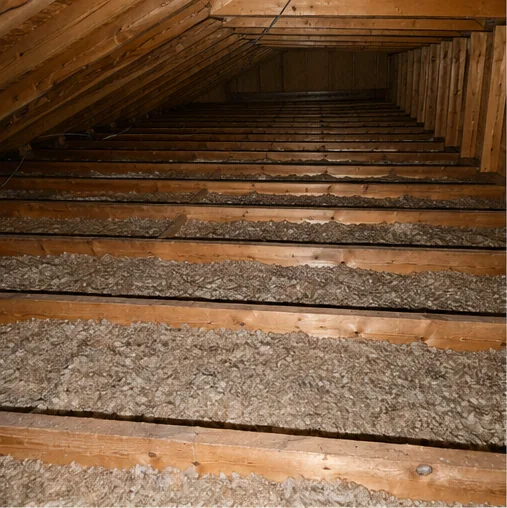
The part is small, but the downstream problems are not.
Insulation running right up to the roof deck with no channel held open — the classic sign baffles are absent.
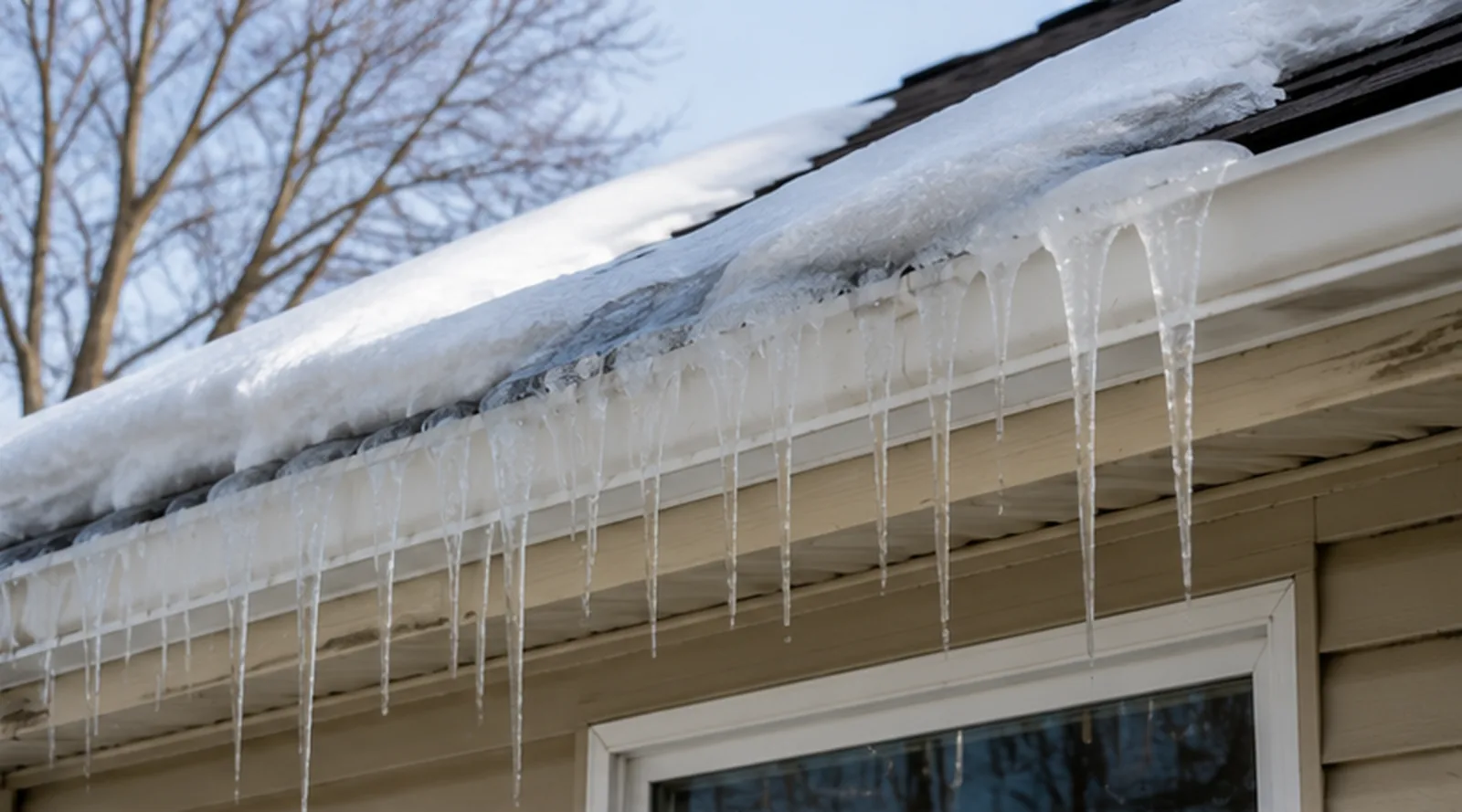
Blocked intake stops the soffit-to-ridge flow, warming the deck and feeding ice dams at the eaves.
With no fresh air at the eaves, moisture lingers and condenses, inviting mold on the sheathing.
Older homes were often insulated before baffles were standard practice at the eaves.
Added blown-in insulation poured over the eaves without first installing chutes.
Baffles that were installed but came loose, slumped, or were crushed by stored items.
Baffles in only some rafter bays, leaving large stretches of the eave blocked.
Insulation upgrades that ignored the soffit airflow, masking the problem with more R-value.
Tucked at the far edge of the attic, baffles are easy to miss without crawling to the eaves.
We move to the low edge of the attic to see whether a clear air channel exists at the rafter bays.
We verify the soffit vents below aren't buried in insulation that should be held back by baffles.
Frost, staining, and dampness near the eaves confirm the airflow has stalled.
We photograph where baffles are missing and prioritize the fix in your 24-hour report.
Baffles are one piece of the airflow puzzle alongside roof ventilation problems, ridge & soffit vent issues, inadequate attic insulation, and attic mold on sheathing. See how we check the attic in our attic inspection and roof inspection, or browse the full defect library and complete home inspection. We serve Hutchinson and McLeod County.