Panel
Two wires, one lug
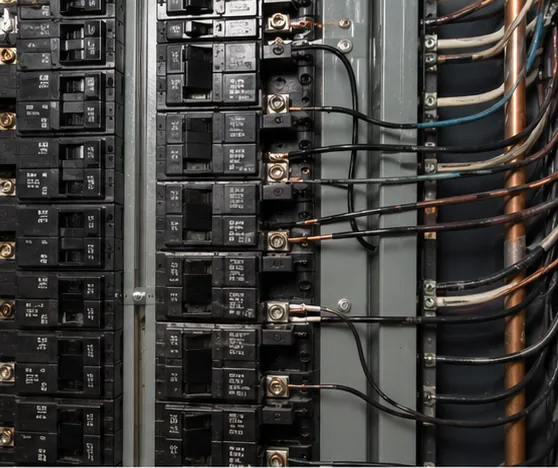
A second conductor slipped under a breaker built for one — the connection runs loose.
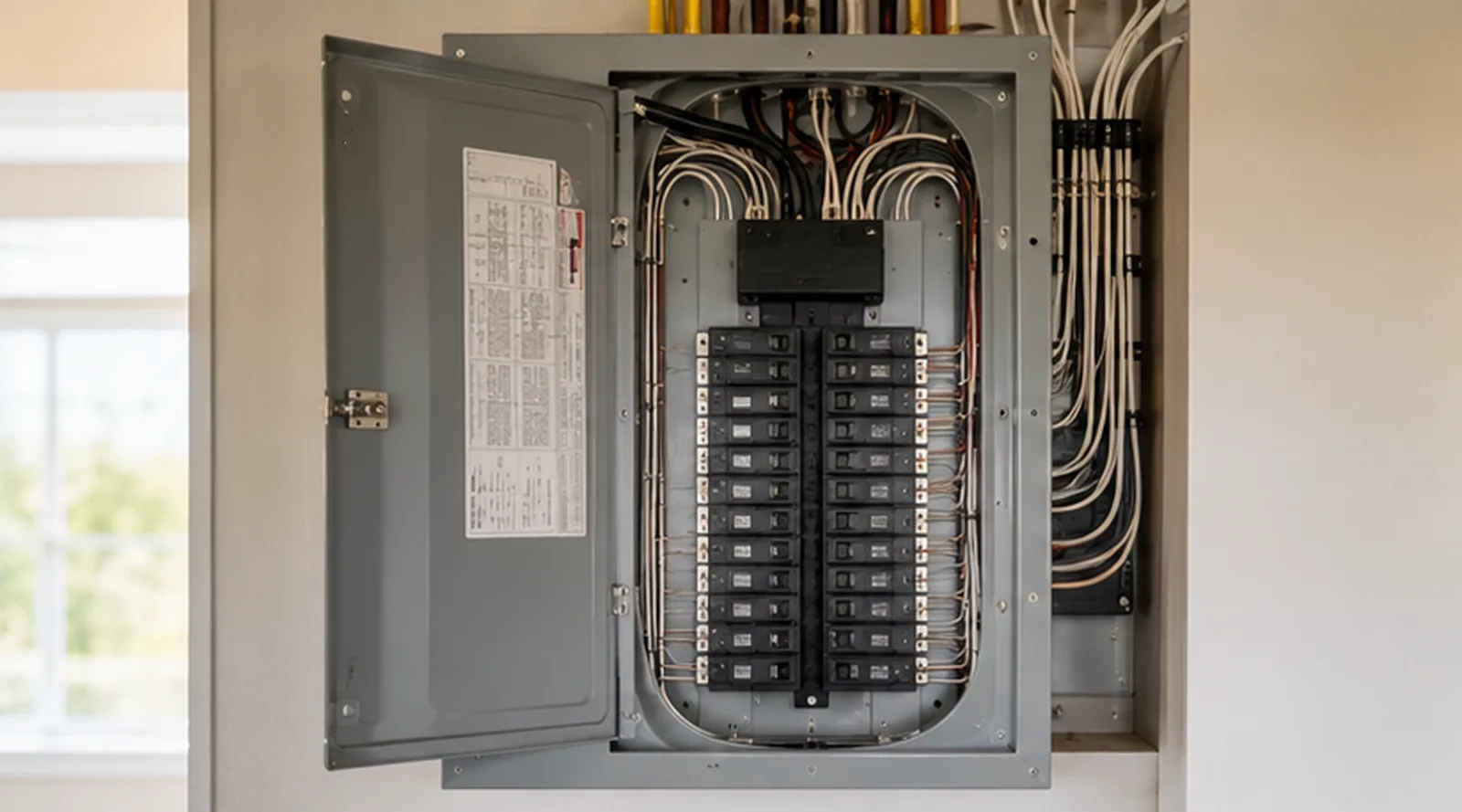
When two circuit conductors are crammed under a single breaker built for one, the connection can loosen and overheat. It's one of the most common panel defects we find in Hutchinson homes — and one of the easiest to miss with the cover on.
Every standard electrical inspection covers this. Get your free instant quote, pick a time, and we'll document exactly what's there in a photo-rich report within 24 hours.
A double-tap (or double-lug) is two electrical conductors clamped under a single breaker terminal that's listed for only one wire. Most residential breakers are designed and rated to hold exactly one conductor. When a second wire is added — usually to feed a new circuit without adding a breaker — neither wire is held securely. A few specific breakers are listed for two conductors, but the vast majority are not, and that's the defect we flag.
It's documented as part of the electrical inspection, one of the eight systems in the full 120-point inspection. Browse the full defect library to understand the other issues we catch in electrical systems.
Get Your Free Quote →
Double-taps almost always show up where someone added a circuit on a budget: a finished basement, a garage outlet, a new bathroom, or a backyard shed. Hutchinson's many owner-finished basements and DIY additions are prime territory. Rather than installing a new breaker or a subpanel, the easiest shortcut is to slip a second wire under an existing breaker — which is exactly what creates the hazard.
A second conductor slipped under a breaker built for one — the connection runs loose.
Discoloration at the breaker lug signals a loose, overheating double-tapped connection.
Basement, garage, and shed circuits added without a free breaker slot or a permit.
Two wires under one lug can't both be clamped tightly, so at least one connection runs loose. Loose connections develop resistance, heat up under load, and can arc — the classic recipe for a panel or connection fire. Because the problem hides behind the panel cover, homeowners rarely know it's there until an inspector removes the dead front and looks.
The fix is straightforward for a licensed electrician: separate the two conductors so each lands on its own breaker — adding a breaker, installing a listed tandem (mini) breaker where the panel allows, or pigtailing the wires properly. A handful of breaker models are listed for two conductors, in which case it isn't a defect. We document each double-tap with a photo so an electrician can correct it; we don't quote the work.
Two conductors under a breaker terminal listed for a single wire.
One or both wires not held securely, raising resistance and heat.
Discoloration and scorching at the breaker from a loose double-tap.
No open slots, so new circuits were forced onto existing breakers.
DIY circuits added to finished basements and garages without inspection.
A single-conductor breaker used where a tandem or subpanel was needed.
When safe, we take the panel cover off to expose every breaker terminal.
We check for two conductors under any breaker not listed for two.
Discoloration, scorching, and warmth at the lug are documented.
Each double-tap is photographed and flagged for a licensed electrician.
Hutchinson and the surrounding McLeod County towns have a high share of older homes with finished basements and additions completed over the years by homeowners. Those projects are where we most often find double-tapped breakers, undersized panels, and circuits added without a permit — which is why opening the panel is a non-negotiable part of how we inspect here.
Get Your Free Quote →Explore more in the Defect Library, or read about related issues: Federal Pacific panels, Overfused circuits, Aluminum wiring, Open grounds. See how this fits into our electrical inspection and the full 120-point home inspection. We serve Hutchinson and McLeod County.