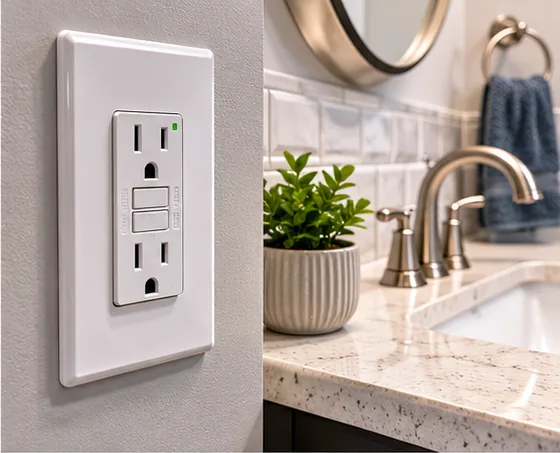
Outlet
Three prongs, no ground
Modern receptacles fitted to old wiring with no ground wire connected behind them.
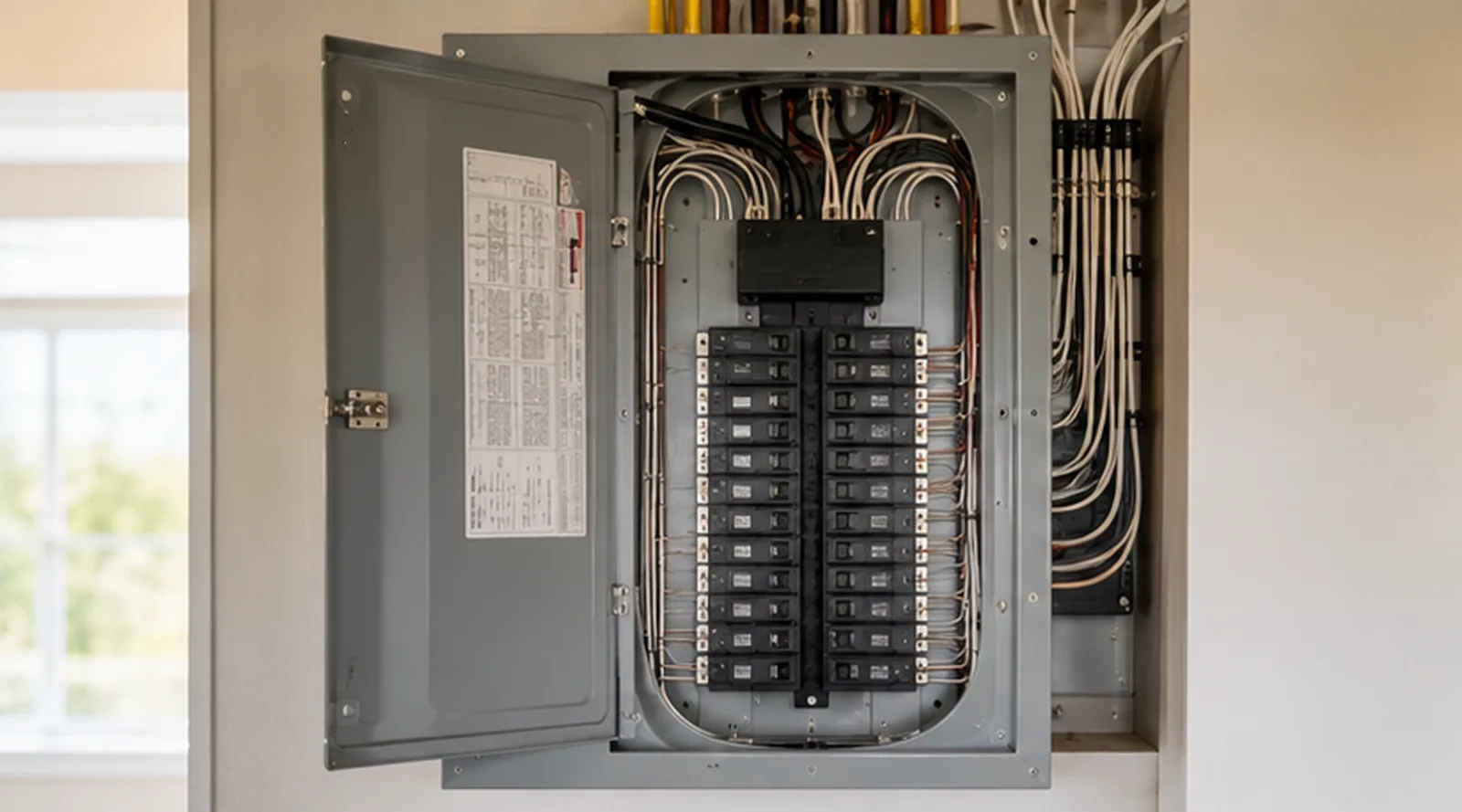
A three-prong outlet looks safe, but if there's no ground wire behind it, that protection is an illusion. Open grounds are common in updated older Hutchinson homes — and our circuit testing finds them at the outlet.
Every standard electrical inspection covers this. Get your free instant quote, pick a time, and we'll document exactly what's there in a photo-rich report within 24 hours.
An open ground is a grounding-type (three-prong) receptacle that has no functioning equipment ground connected to it. The slot for the ground prong is there, so devices plug in normally, but there's no actual path to safely carry fault current away. It typically happens when someone swaps a two-prong outlet for a three-prong one without running a ground, or when a ground wire is broken, disconnected, or never landed.
It's documented as part of the electrical inspection, one of the eight systems in the full 120-point inspection. Browse the full defect library to understand the other issues we catch in electrical systems.
Get Your Free Quote →
Many Hutchinson homes built before the 1960s were originally wired with ungrounded, two-conductor circuits. Over the years, owners replaced the original two-prong outlets with modern three-prong receptacles — often to fit grounded plugs and surge strips — without adding the ground the new outlet expects. The result looks updated but isn't actually grounded, and it's one of the most frequent electrical findings in older homes here.
Modern receptacles fitted to old wiring with no ground wire connected behind them.
Without a ground, an energized appliance case offers no protection against shock.
Surge protectors plugged into an open ground don't actually safeguard your electronics.
The ground is the safety path that carries fault current away and lets a breaker trip — and it's what protects you if an appliance's metal case becomes energized. With an open ground, a fault can leave the case live and there's no protection against shock, and surge protectors plugged into the outlet don't actually work as intended. Because the outlet physically accepts a grounded plug, people trust protection that isn't there.
A licensed electrician can correct an open ground by running a proper equipment ground to the outlet, or, where that's impractical in older wiring, by protecting the circuit with a GFCI device and labeling the outlets "GFCI Protected, No Equipment Ground" as permitted. The right approach depends on the wiring. We test and document each open ground; we don't quote the work.
Three-prong outlets installed on ungrounded two-conductor circuits.
A ground conductor that's disconnected, loose, or never landed.
Two-prong and three-prong outlets jumbled on the same old circuit.
Surge strips that can't function because there's no ground.
Receptacles replaced without testing whether a ground exists.
Outlets that look modern but provide no grounding protection.
We use a receptacle tester on a representative sample throughout the home.
Open grounds clustered on old circuits point to original ungrounded wiring.
We note where GFCI protection could serve as an accepted remedy.
Each open ground is documented for correction by a licensed electrician.
Older Hutchinson and McLeod County homes were overwhelmingly wired with two-conductor, ungrounded circuits before grounding became standard. As owners modernized outlets over the decades, open grounds multiplied — so it's one of the most consistent findings we document on pre-1965 homes across the area.
Get Your Free Quote →Explore more in the Defect Library, or read about related issues: Missing GFCI, Knob & tube wiring, Aluminum wiring, Double-tapped breakers. See how this fits into our electrical inspection and the full 120-point home inspection. We serve Hutchinson and McLeod County.