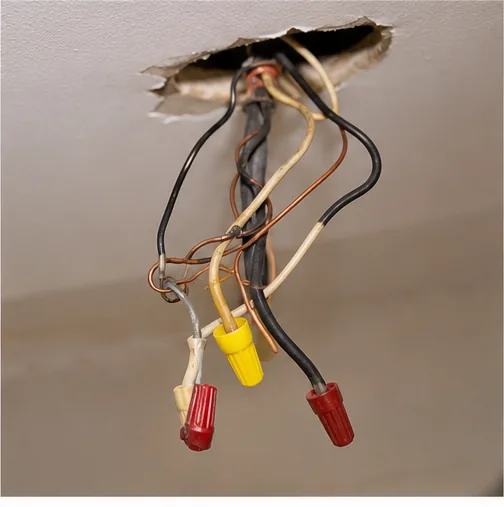
Wiring
Live K&T in the attic
Single cloth-covered conductors on porcelain knobs, often still energized decades after the home was built.
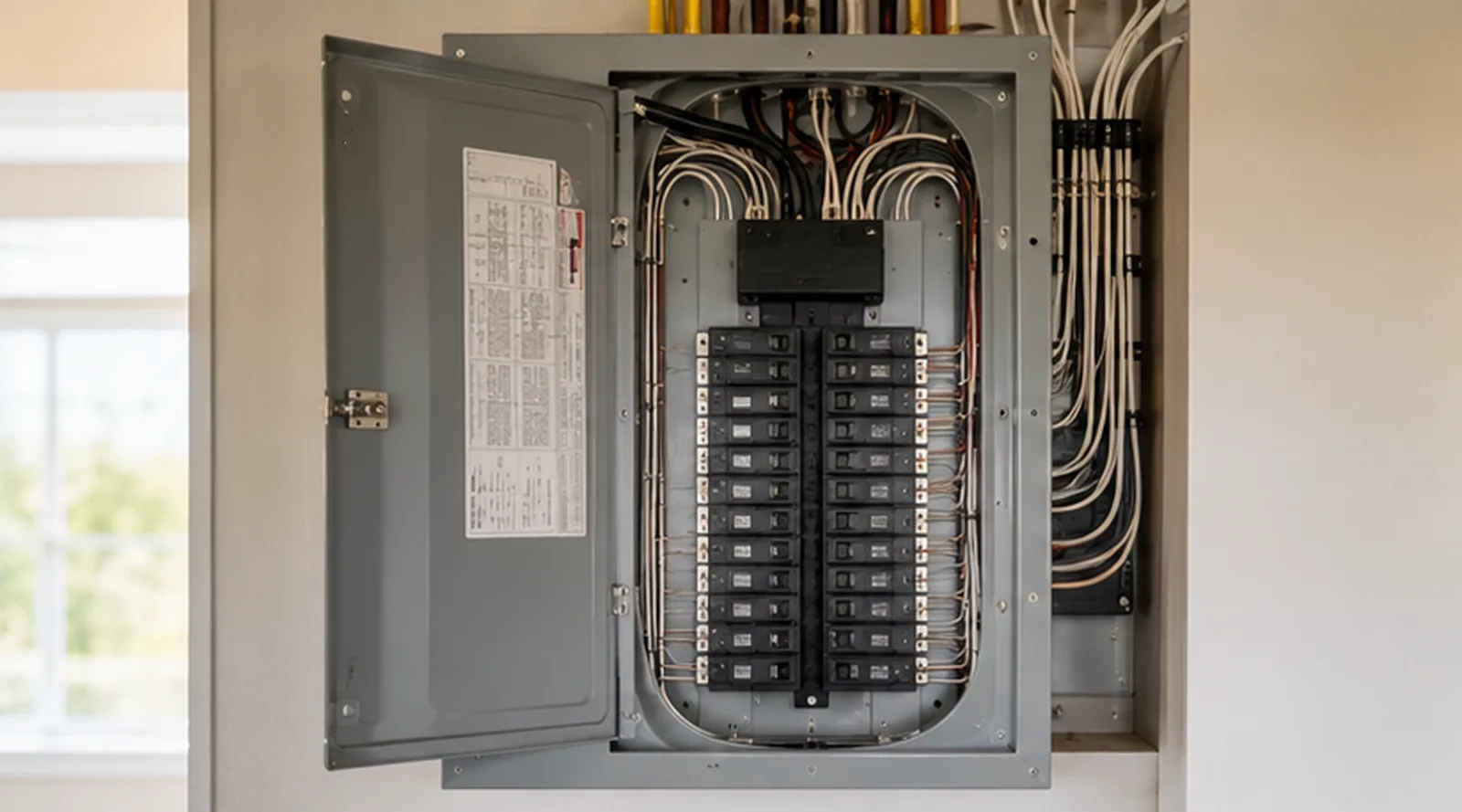
Pre-1950 homes around Hutchinson can still carry original knob-and-tube wiring buried in walls and attics. It's ungrounded, brittle with age, and a serious fire and insurance concern. We find it and document it plainly.
Every standard electrical inspection covers this. Get your free instant quote, pick a time, and we'll document exactly what's there in a photo-rich report within 24 hours.
Knob-and-tube (K&T) is the wiring method used in American homes from roughly 1880 to the late 1940s. Insulated copper conductors run individually through the framing — supported by porcelain knobs and protected by porcelain tubes where they pass through joists and studs. There is no grounding conductor and no protective sheathing, just two single wires with rubberized cloth insulation strung through open cavities. In Hutchinson's older neighborhoods near downtown and the river, it's still common to find live K&T in attics, basements, and behind plaster.
It's documented as part of the electrical inspection, one of the eight systems in the full 120-point inspection. Browse the full defect library to understand the other issues we catch in electrical systems.
Get Your Free Quote →
Hutchinson grew steadily through the early twentieth century, and many of its turn-of-the-century farmhouses and bungalows were originally wired with knob-and-tube. Over a century later, that wiring is often still energized — sometimes spliced into modern circuits, sometimes buried under blown-in attic insulation that traps heat the original design never anticipated. Minnesota's cold-climate insulation upgrades are a major reason aging K&T becomes dangerous here.
Single cloth-covered conductors on porcelain knobs, often still energized decades after the home was built.
K&T packed under blown-in attic insulation can't shed heat and becomes a fire concern.
Two-prong ungrounded circuits offer no shock protection, even with three-prong adapters fitted.
Knob-and-tube has no ground path, so there's no protection against shock or fault current — and three-prong adapters plugged into ungrounded circuits give a false sense of safety. Where K&T is buried in insulation, the conductors can overheat and ignite surrounding material. Most Minnesota home insurers now decline, surcharge, or require replacement of active knob-and-tube before they will write or renew a policy, which can stall a closing if it isn't caught early.
There is no safe repair for deteriorated knob-and-tube — the accepted fix is replacement with modern grounded wiring by a licensed electrician. Partial replacement of accessible runs combined with confirming that no remaining K&T is buried in insulation is sometimes done in stages, but most buyers and insurers want the active K&T fully retired. We don't quote the work; we document its extent so your electrician can scope it accurately.
Cloth-and-rubber insulation that cracks and crumbles off the conductor after 70-plus years.
Modern Romex tied onto old K&T without a junction box — a loose-connection hazard.
K&T buried in attic insulation, trapping heat the open-air design never accounted for.
Two-prong outlets throughout, leaving no ground path for fault current.
Old light-duty circuits now feeding modern appliance and electronics loads.
K&T fed from an outdated fuse box rather than a modern breaker panel.
We look for porcelain knobs, tubes, and single cloth conductors in every accessible cavity.
Ungrounded two-prong receptacles and old fuse circuits are tested and mapped.
We flag any K&T buried under attic insulation as a heat and fire concern.
Active K&T is marked a safety item in your 24-hour report for a licensed electrician.
Minnesota's cold winters drove decades of attic insulation upgrades, and in older Hutchinson and McLeod County homes that insulation was often blown right over live knob-and-tube. That combination — energized century-old wire packed in heat-trapping insulation — is exactly what makes K&T a flagged safety concern here, and it's a frequent sticking point with Minnesota insurers at closing.
Get Your Free Quote →Explore more in the Defect Library, or read about related issues: Aluminum wiring, Open grounds, Federal Pacific panels, Missing GFCI. See how this fits into our electrical inspection and the full 120-point home inspection. We serve Hutchinson and McLeod County.