Joints
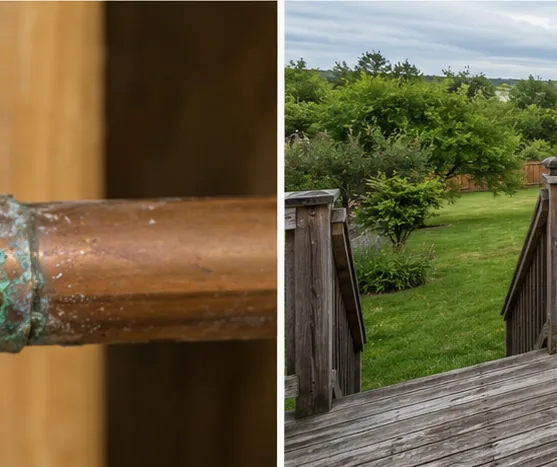
Corroded copper
Green-stained, corroding copper joints weeping under constant supply pressure.

A weeping joint under a sink or a pinhole in a copper line can rot cabinets and frame mold long before you notice it. We check supply piping, valves, and connections under pressure and document where it's leaking.
Every standard plumbing inspection covers this. Get your free instant quote, pick a time, and we'll document exactly what's there in a photo-rich report within 24 hours.
Supply lines are the pressurized pipes and tubes that carry water to every fixture — copper, PEX, or the flexible braided supply tubes feeding faucets and toilets, plus the shutoff valves at each fixture. Because they're always under pressure, even a tiny defect leaks continuously. Leaks show up as corroded or green-stained copper joints, weeping shutoff valves, dripping supply tubes, or pinhole leaks that copper develops over time.
It's documented as part of the plumbing inspection, one of the eight systems in the full 120-point inspection. Browse the full defect library to understand the other issues we catch in plumbing systems.
Get Your Free Quote →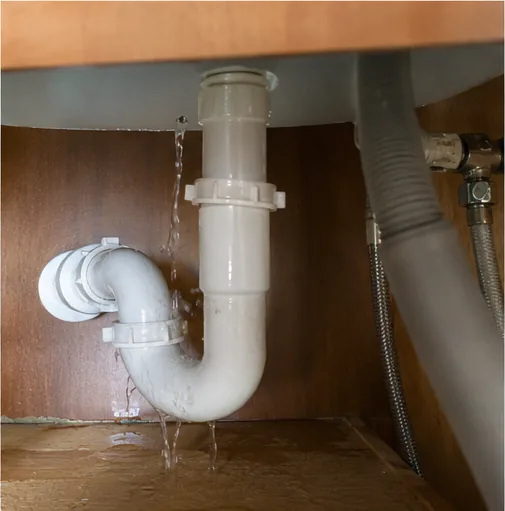
Supply leaks turn up everywhere from original construction to recent DIY fixture swaps. Under-sink shutoff valves and braided supply tubes are common culprits — they're cheap parts that fail with age and corrosion. In older Hutchinson homes, copper can develop pinhole leaks from years of water chemistry, while newer homes leak at hastily made connections. The common thread is that supply lines are under constant pressure, so any weakness leaks all the time.
Green-stained, corroding copper joints weeping under constant supply pressure.
Under-sink shutoff valves that weep at the stem and stain the cabinet base.
Braided supply tubes to faucets and toilets that fail with age and can flood a room.
Because supply lines are pressurized, a small leak never stops — it just keeps wetting the surrounding wood, drywall, and subfloor. That slow, continuous moisture is exactly what rots cabinets, swells subflooring, and feeds mold inside walls and under sinks. A failed braided supply tube or a let-go valve can also fail suddenly and flood a room. The hidden, ongoing leaks usually cause more cumulative damage than the dramatic ones.
A licensed plumber repairs supply leaks by resoldering or replacing corroded joints, swapping failing shutoff valves and supply tubes, and addressing copper pinhole leaks — sometimes replacing a problem run. Where leaks are widespread, repiping a section may be recommended. We document each active leak and the resulting moisture damage; we don't quote the work.
Green or white corrosion at soldered and threaded copper connections.
Shutoff valves leaking at the stem under sinks and toilets.
Tiny perforations in copper from years of water chemistry.
Worn braided fixture tubes that drip or let go suddenly.
Slow leaks rotting cabinets and feeding mold inside walls.
Improperly made fixture connections that weep under pressure.
We operate fixtures and put the supply system under normal working pressure.
Joints, shutoff valves, and supply tubes are checked for corrosion and weeping.
Under-sink cabinets and ceilings below baths are examined for moisture and staining.
Active leaks and water damage are documented for a licensed plumber.
In Minnesota's climate, a hidden supply leak in an exterior wall or unheated cabinet space is a freeze risk as well as a moisture problem. We pay close attention to shutoff valves and supply tubes in Hutchinson homes, and we check ceilings below upstairs baths where slow leaks travel and stain before anyone notices.
Get Your Free Quote →Explore more in the Defect Library, or read about related issues: Water heater end of life, Galvanized pipes, Polybutylene pipes, Improper drain slope. See how this fits into our plumbing inspection and the full 120-point home inspection. We serve Hutchinson and McLeod County.