Pipe
Gray plastic supply
Flexible gray pipe stamped PB2110 — the hallmark of failure-prone polybutylene.

Homes built around Hutchinson from the late 1970s into the mid-1990s may have polybutylene water supply lines — a gray plastic pipe prone to sudden, hidden failure. We trace the visible piping and flag it for evaluation.
Every standard plumbing inspection covers this. Get your free instant quote, pick a time, and we'll document exactly what's there in a photo-rich report within 24 hours.
Polybutylene (often called Poly-B) is a flexible plastic water-supply pipe, usually gray but sometimes blue or black, installed widely from about 1978 to 1995 as a cheaper alternative to copper. Over time, reactions with chlorine and other oxidants in municipal water degrade the pipe from the inside out, making it brittle and prone to cracking and rupturing — often at the fittings and without warning. Production stopped after widespread failures.
It's documented as part of the plumbing inspection, one of the eight systems in the full 120-point inspection. Browse the full defect library to understand the other issues we catch in plumbing systems.
Get Your Free Quote →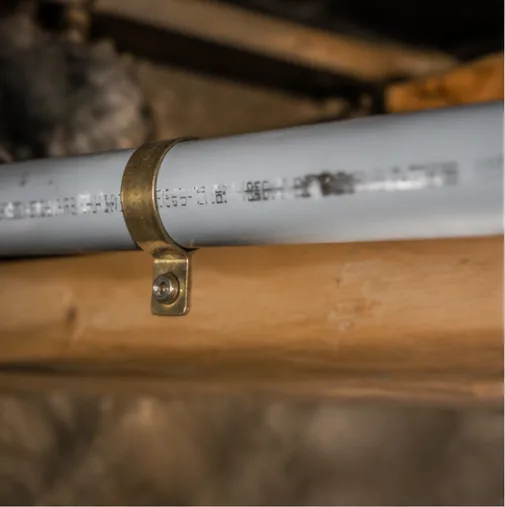
Polybutylene was popular during a real building period in and around Hutchinson, so homes from that late-'70s-through-mid-'90s window are the ones to watch. The pipe was inexpensive and quick to install, which made it attractive at the time. Decades of exposure to chlorinated municipal water is what turns it brittle, and Minnesota's treated water supplies contribute to the same internal degradation seen elsewhere.
Flexible gray pipe stamped PB2110 — the hallmark of failure-prone polybutylene.
Plastic and copper crimp fittings on gray pipe are common rupture points.
Active Poly-B can lead insurers to decline, surcharge, or require replacement.
Polybutylene's signature failure is sudden — a line that looked fine ruptures and floods a finished basement or upper floor, often at a hidden fitting. Because the degradation is internal, the pipe gives little outward warning. Many insurers view active polybutylene as a higher risk and may decline, surcharge, or require replacement, which can complicate a Minnesota closing if it isn't identified beforehand.
There's no reliable repair for embrittled polybutylene; the accepted remedy is replacement with modern PEX or copper by a licensed plumber, typically a whole-house repipe since the whole system shares the same aging material. We trace and document the visible piping and recommend a plumber evaluate the full system; we don't quote the work.
Gray plastic supply line gone brittle from chlorine exposure inside.
Crimp connections that crack and leak ahead of the pipe itself.
Sudden failures behind walls and in ceilings with little warning.
Flaking, discolored Poly-B visible at the main and water heater.
Sections patched with copper or PEX while Poly-B remains elsewhere.
A whole house of the same aging pipe nearing the end of its life.
We follow the supply line from the main shutoff and meter, checking pipe color and fittings.
Connections at the water heater often reveal gray Poly-B and its crimp fittings.
Visible supply runs at fixtures and in the basement are examined for gray plastic.
Polybutylene is documented and flagged for a licensed plumber to evaluate.
Hutchinson and McLeod County have a recognizable band of late-1980s and early-1990s homes that may carry polybutylene, and Minnesota's chlorinated municipal water drives the same internal degradation that makes Poly-B fail elsewhere. We always check the main shutoff and water-heater connections first, where the gray pipe is most visible.
Get Your Free Quote →Explore more in the Defect Library, or read about related issues: Galvanized pipes, Leaking supply lines, Water heater end of life, Improper drain slope. See how this fits into our plumbing inspection and the full 120-point home inspection. We serve Hutchinson and McLeod County.