Age
Past its lifespan
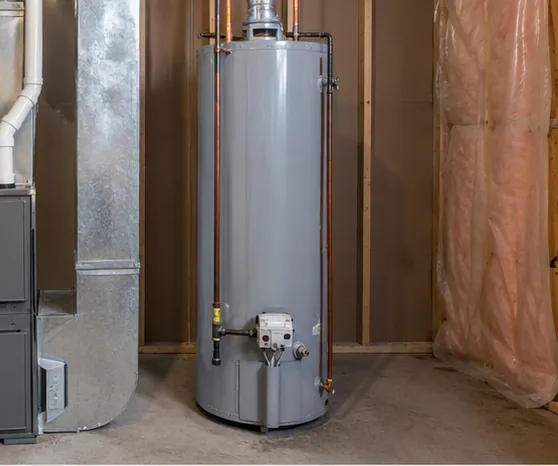
A unit 10-plus years old, decoded from the serial number, is living on borrowed time.
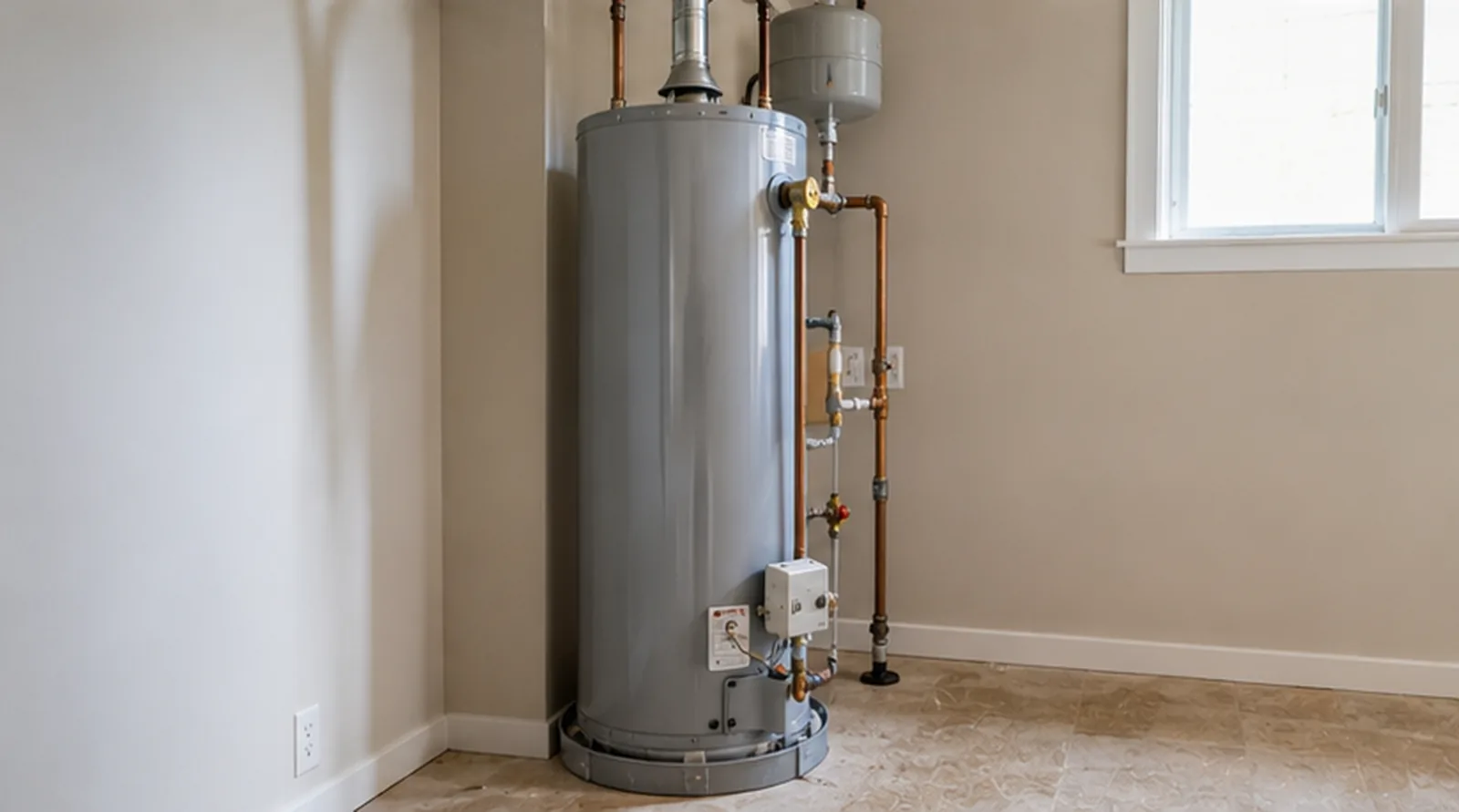
Tank water heaters have a finite lifespan, and a corroding one can leak, flood, or fail without warning. We read the unit's age, inspect for corrosion and safety issues, and tell you where it stands.
Every standard plumbing inspection covers this. Get your free instant quote, pick a time, and we'll document exactly what's there in a photo-rich report within 24 hours.
A standard tank water heater generally lasts on the order of 8 to 12 years. Inside, an anode rod sacrifices itself to protect the steel tank from corrosion; once it's spent, the tank itself starts to rust. End of life shows up as rust at the tank base and fittings, sediment buildup that reduces efficiency, weeping seams, or a unit simply past its expected service age. A failed tank doesn't just stop making hot water — it can split and dump its entire contents.
It's documented as part of the plumbing inspection, one of the eight systems in the full 120-point inspection. Browse the full defect library to understand the other issues we catch in plumbing systems.
Get Your Free Quote →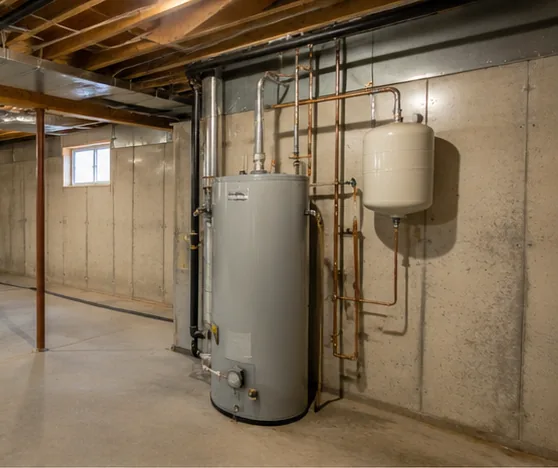
Water heaters are easy to ignore until they fail, so many Hutchinson homes are running units well past their expected age. Minnesota's mineral-rich water accelerates sediment buildup and corrosion inside the tank, and cold incoming groundwater makes the unit work harder year-round. We frequently find heaters in utility rooms and finished basements that are a decade or more old with visible corrosion at the connections.
A unit 10-plus years old, decoded from the serial number, is living on borrowed time.
Rust at the tank base and fittings signals a corroding tank that can split and flood.
A missing TPR discharge or poor gas venting is a real safety concern we flag.
The headline risk is flooding: a corroded tank can split and release dozens of gallons onto a finished basement floor. Beyond that, a missing or improperly routed TPR valve discharge is a genuine safety concern, since the valve is what relieves dangerous pressure. Sediment cuts efficiency and can damage the burner or element, and a gas unit with poor venting or backdrafting is a combustion-safety issue we flag immediately.
An aging or corroded tank that's leaking is replaced rather than repaired — by a licensed plumber, with proper venting, a correctly piped TPR discharge, and seismic or strapping details as applicable. A unit that's simply old but sound may be monitored, but a leaking tank is end-of-life. We document the age, corrosion, venting, and TPR condition; we don't quote the work.
A water heater past its 8-to-12-year expected service life.
Rust and weeping at the tank base, fittings, and connections.
Mineral sediment overheating and corroding the tank bottom.
A missing, capped, or improperly piped relief-valve discharge.
Poor draft or backdrafting on a gas unit — a combustion concern.
Discolored hot water signaling internal tank corrosion.
We read the serial number to determine the manufacture date and remaining service life.
The tank base, fittings, and connections are checked for rust and active leaks.
We verify the TPR valve and its discharge piping, and gas venting where applicable.
Age, corrosion, and safety findings are documented for a licensed plumber.
Minnesota's cold incoming groundwater and mineral content make water heaters work harder and scale faster, so Hutchinson units often show their age sooner. We pay particular attention to gas-unit venting in the tight, cold utility rooms common in McLeod County homes, where backdrafting is a real combustion-safety concern in winter.
Get Your Free Quote →Explore more in the Defect Library, or read about related issues: Leaking supply lines, Galvanized pipes, Polybutylene pipes, Improper drain slope. See how this fits into our plumbing inspection and the full 120-point home inspection. We serve Hutchinson and McLeod County.